What Paint Correction Actually Is
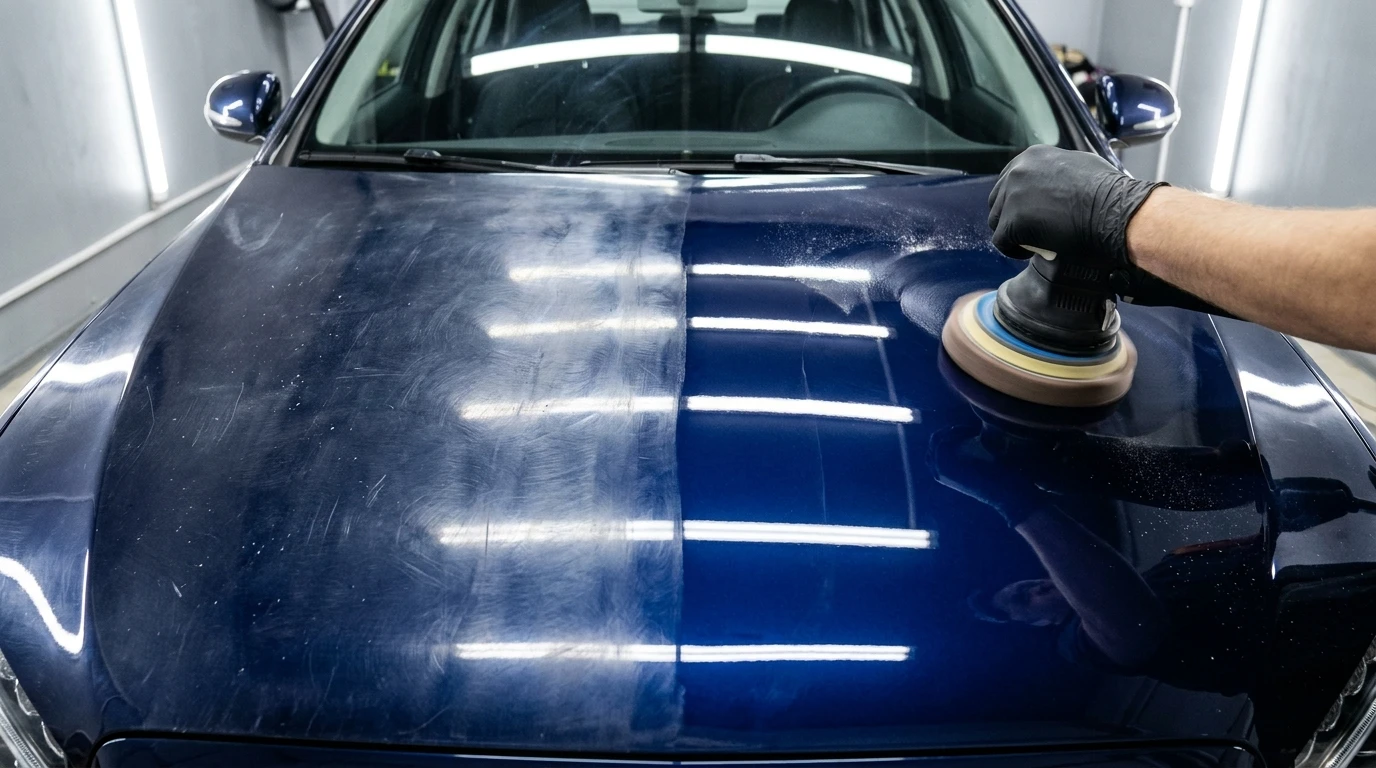
Paint correction is the process of permanently removing surface imperfections from your vehicle's clear coat using machine polishers and specialized compounds. Unlike a wax or sealant that fills in scratches temporarily, paint correction actually levels the clear coat surface so those defects no longer catch the light.
Think of it this way: your car's paint has a microscopic texture. Every time it gets washed with a dirty sponge, dried with a rough towel, or brushed by an automatic car wash, tiny grooves get cut into the clear coat. Individually, you might not notice them. But over time, hundreds of those grooves create a hazy, dull appearance that makes even a clean car look tired.
That's what swirl marks are: thousands of fine scratches arranged in circular patterns, usually from improper washing. Paint correction uses abrasive compounds and a dual-action or rotary polisher to shave down the clear coat just enough to remove those grooves, leaving a flat, reflective surface behind.
We perform paint correction and restoration on vehicles throughout Douglas County, and the transformation is often dramatic. Cars that looked faded and neglected come out looking better than the day they left the dealership.
It's worth noting that paint correction is not the same as a polish-and-wax job at a detail shop. Products like "scratch removers" and "swirl removers" you find at auto parts stores are typically fillers. They plug the scratch with a temporary material that washes away over time. True paint correction physically removes the defect from the surface. The result is permanent, as long as you don't re-introduce new scratches through poor wash habits afterward.
Levels of Correction (1-Step, 2-Step, 3-Step)
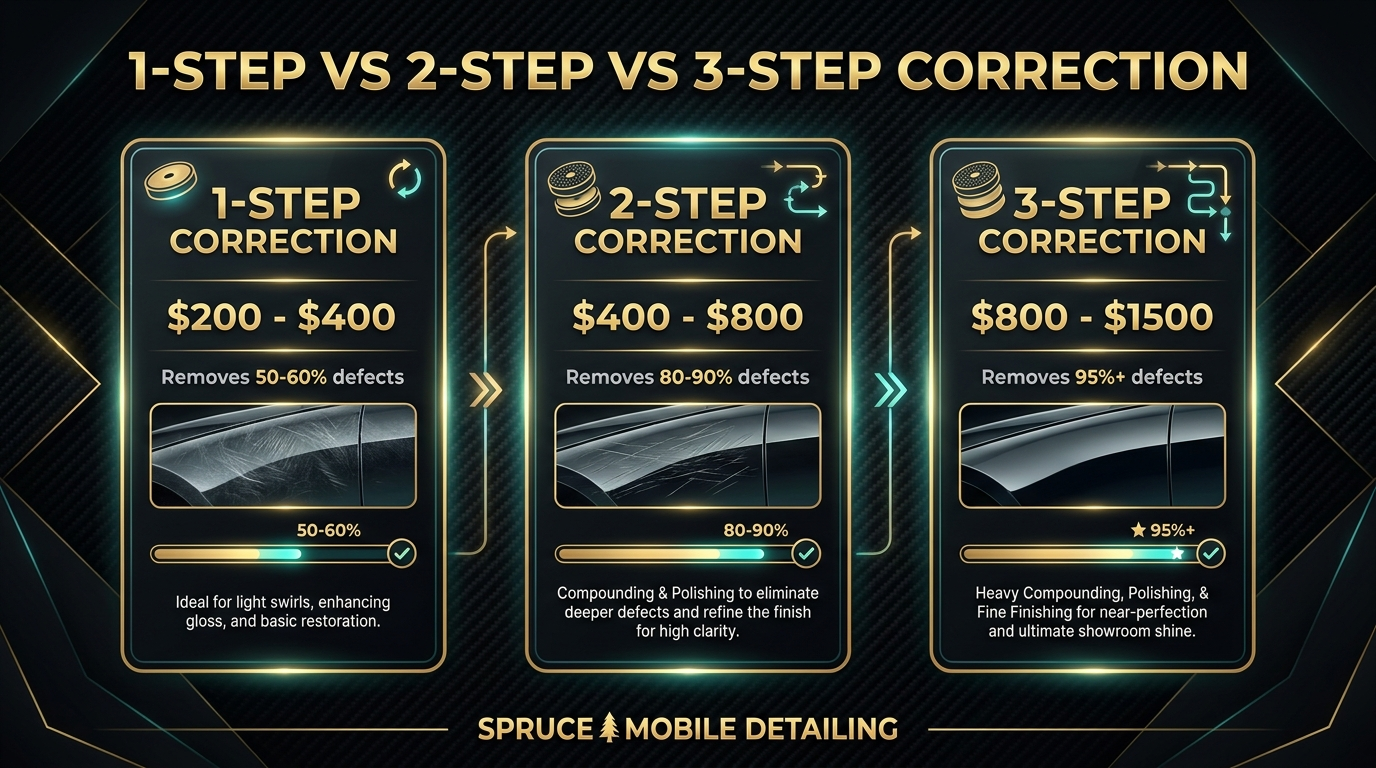
Not every car needs the same amount of work. Paint correction is typically categorized into levels based on how many polishing stages are involved:
- 1-Step (Enhancement Polish): A single pass with a medium-cut compound. This removes light swirl marks, water spots, and minor haze. It's ideal for newer vehicles or cars that have been reasonably well-maintained. You'll see a noticeable improvement, but deeper scratches will remain. Expect about 50-70% defect removal.
- 2-Step (Full Correction): The most common service we perform. The first pass uses a heavier compound to cut through deeper swirls, scratches, and oxidation. The second pass uses a finer polish to refine the surface to a mirror-like finish. This removes 80-90% of defects and is what most vehicles in Castle Rock and the surrounding area need.
- 3-Step (Multi-Stage Correction): Reserved for severely neglected paint or show-car preparation. Involves heavy cutting, medium polishing, and a final finishing stage. This targets 95%+ defect removal but takes significantly longer and costs more.
During our initial inspection, we use a paint depth gauge and LED inspection lights to evaluate your clear coat thickness and defect severity. This tells us exactly which level your vehicle needs without guessing.
One important detail: each polishing stage removes a small amount of clear coat. That's the trade-off. A 1-step takes off the least, a 3-step the most. This is why measuring paint thickness matters. On a vehicle with thin factory clear coat or one that's been corrected multiple times before, we may recommend a less aggressive approach to preserve what's left. It's a balancing act between defect removal and clear coat preservation, and experience matters here.
What It Can and Can't Fix
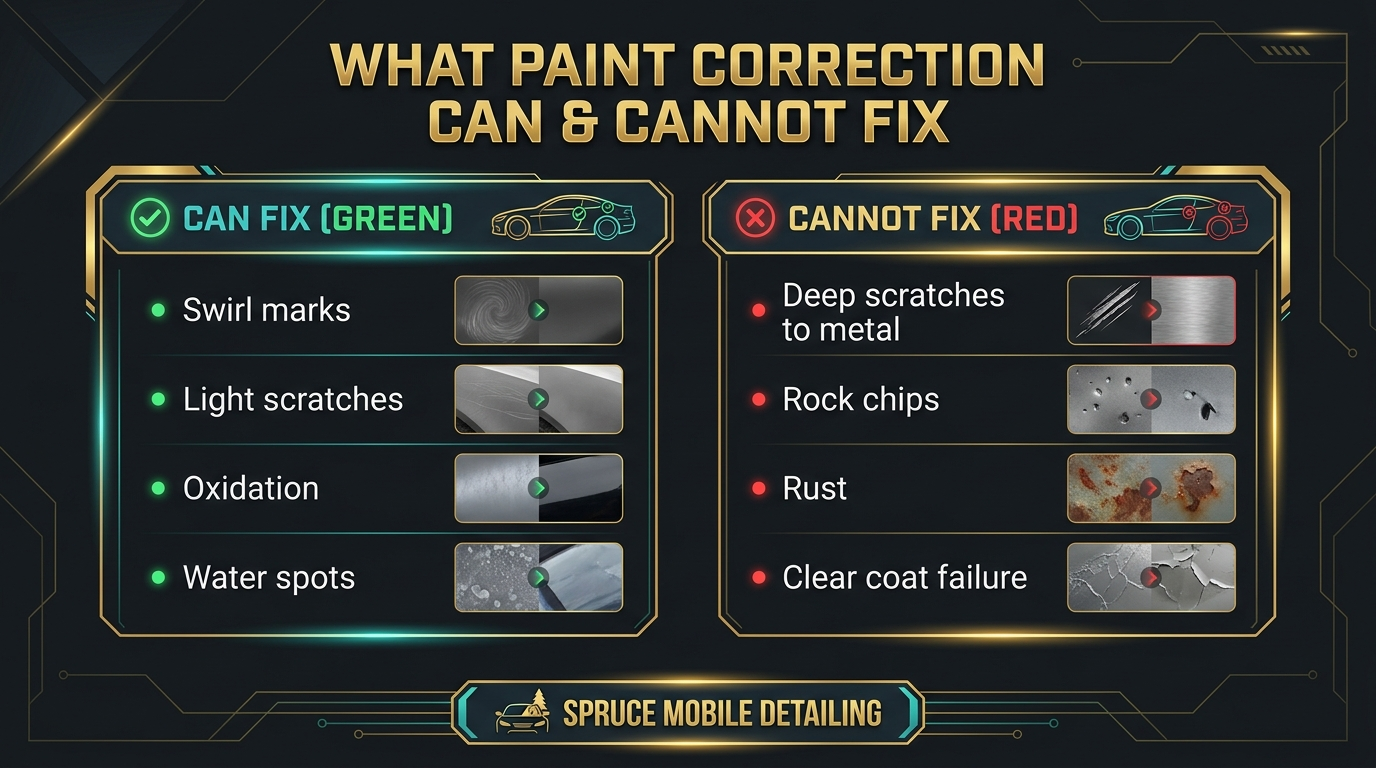
Paint correction is powerful, but it's not magic. Here's an honest breakdown of what falls within its reach and what doesn't.
Paint correction CAN fix:
- Swirl marks from improper washing or automatic car washes
- Light to moderate scratches that haven't penetrated the clear coat
- Water spot etching (mineral deposits that eat into the surface)
- Oxidation and fading from UV exposure (extremely common here in Colorado at 6,000+ feet of elevation)
- Buffer trails or holograms from previous poor polishing work
- Bird dropping etching and tree sap stains
Paint correction CANNOT fix:
- Deep scratches that go through the clear coat into the base coat or primer (run your fingernail across it; if it catches, it's likely too deep)
- Rock chips or paint chips
- Rust spots
- Major dents or body damage
- Factory defects like orange peel in the paint (though this can be reduced)
A good rule of thumb: if you can feel the scratch with your fingernail, paint correction alone probably won't make it disappear completely. It can improve it, but full removal would require touch-up paint or wet sanding, which is a different process entirely.
Free Quote
Wondering If Your Paint Needs Correction?
We come to your home or office in Castle Rock and throughout Douglas County.
How to Know If Your Car Needs It
Here's a simple self-diagnosis you can do in your own driveway. You don't need any special tools, just sunlight or a bright flashlight.
The flashlight test: Take your phone flashlight (or any bright, focused light) and hold it a few inches from your paint at an angle. Move it slowly across different panels. If you see a web of fine lines radiating out from the light source, those are swirl marks. The more visible they are, the more correction you need.
The sunlight test: Park your car in direct sunlight. Colorado gives us plenty of it. Walk around the vehicle and look at the paint from different angles. Does it look sharp and reflective, or does it have a hazy, cloudy appearance? Haze means oxidation and swirl marks are scattering the light instead of reflecting it cleanly.
The touch test: Run your clean, dry hand across a freshly washed panel. Does it feel perfectly smooth, or can you feel a slight roughness or grittiness? That texture is contamination bonded to the clear coat. While a clay bar treatment handles contamination, the scratches underneath often need correction too.
If your car is more than 2-3 years old and has never been corrected, especially if it's been through automatic car washes, there's a very good chance it would benefit from at least a 1-step enhancement polish. Vehicles garaged most of their life in Highlands Ranch or Parker tend to be in better shape than daily drivers parked outside, but even they accumulate defects over time.
Paint Correction Before Ceramic Coating
If you're considering ceramic coating, paint correction isn't optional. It's a prerequisite.
Here's why: ceramic coating is a semi-permanent protective layer that bonds to whatever surface is underneath it. If you apply ceramic coating over swirl marks and scratches, you're locking those defects under a layer of protection that will last for years. You'll have a well-protected car that still looks dull and scratched.
Every ceramic coating we apply at Spruce Mobile Detailing includes paint correction as part of the prep work. We compound and polish the paint to remove as many defects as possible, then decontaminate the surface with clay bar treatment, iron remover, and an IPA (isopropyl alcohol) wipe-down to strip any remaining oils or residue. Only then do we apply the coating.
This is one of the biggest differences between a professional ceramic coating application and a DIY kit or quick dealer add-on. The prep work is where the magic happens. A properly corrected and coated vehicle in Castle Rock will maintain that deep, wet-look gloss for years, protected from Colorado's intense UV, road salt, and red dirt.
If you're not sure whether your vehicle needs correction, a coating, or both, we're happy to do a free inspection and give you an honest recommendation. Sometimes a 1-step polish and a good sealant is all you need. We'll tell you that if it's the case.
FREQUENTLY ASKED QUESTIONS
How long does paint correction take?
A 1-step enhancement polish typically takes 3-5 hours depending on vehicle size. A full 2-step correction runs 6-10 hours, and a 3-step correction can take 10-15 hours or more. We don't rush the process because cutting corners with a machine polisher can cause more damage than it fixes.
Will paint correction damage my clear coat?
When performed correctly with proper technique and equipment, paint correction is safe. We use a paint depth gauge before starting to ensure there's enough clear coat to work with. That said, every correction does remove a microscopic amount of clear coat, which is why we only recommend the level of correction your vehicle actually needs.
How often should I get paint correction done?
Ideally, only when needed. If you protect your paint with ceramic coating after correction, you may not need another correction for 3-5 years or longer. Without protection, swirl marks and defects will return within months depending on your washing habits and how your vehicle is stored.
Can I do paint correction myself?
It's possible with a dual-action polisher, quality compounds, and a lot of patience and practice. However, the risk of burning through clear coat or creating holograms is real for beginners. If you've never used a machine polisher before, we'd recommend starting with a junk panel to practice on rather than experimenting on your daily driver.