
What Dealer Prep Actually Includes (Not Much)
You just signed the papers, the finance manager tried to sell you fabric protection and paint sealant for $1,500, and your new car is sitting in the lot with a fresh wash and a bow on it. It looks perfect. But what did the dealership actually do to prepare the paint?
In most cases, the answer is: a quick machine wash, a spray-on wax or dressing to make it shine for delivery day, and that's about it. Some dealers run new vehicles through the same automatic brush wash they use for every trade-in and service car on the lot. Others have a detail team that does a passable hand wash, but they're processing dozens of vehicles a week with shared towels and generic products.
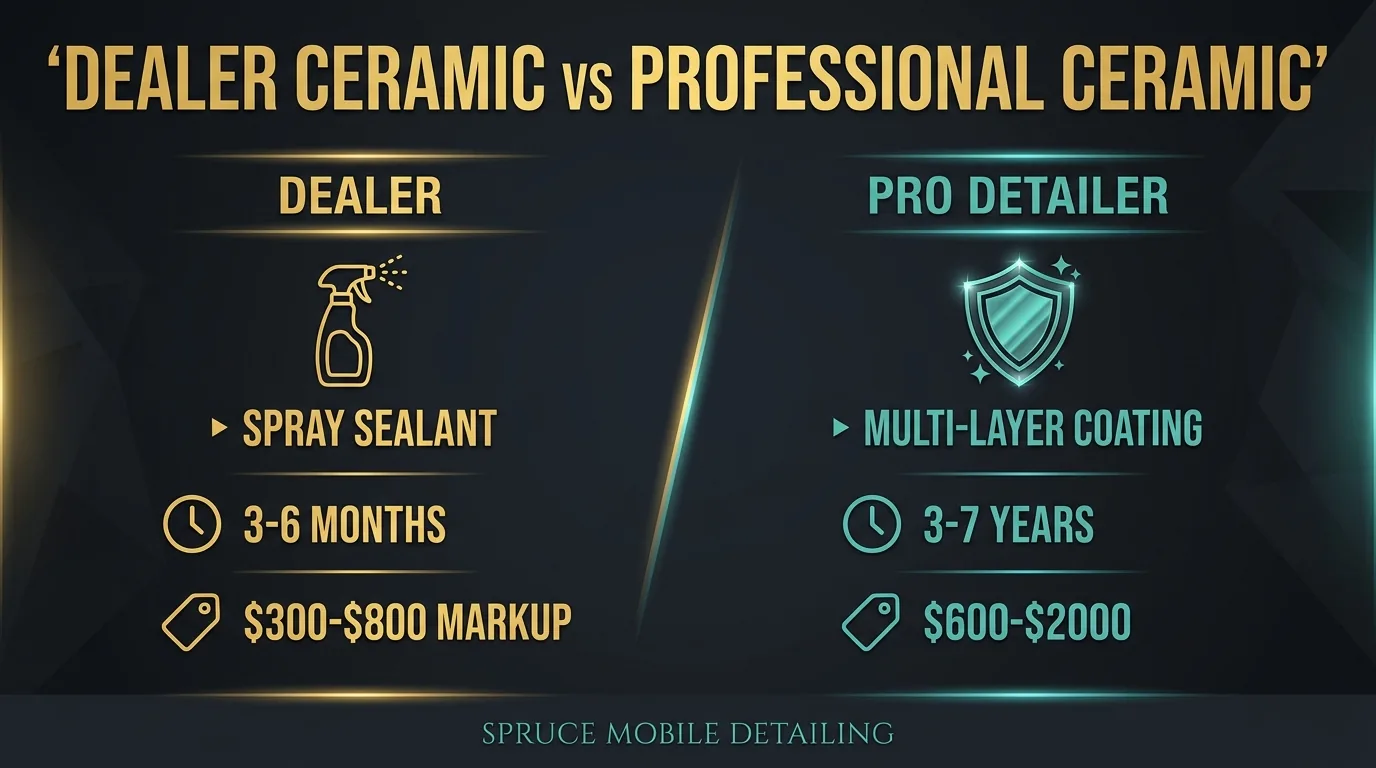
That "dealer-applied paint protection" they try to upsell? It's typically a spray sealant that lasts a few months at best. It's not a ceramic coating. It's not PPF. It's a glorified wax applied in minutes by someone who has fifteen other cars to prep that day.
The point isn't to bash dealerships. They're in the business of selling cars, not detailing them. But it means your new car's paint is essentially unprotected the moment you drive it off the lot. And in Colorado, that matters more than you might think.
Why New Cars Still Need Protection
There's a common assumption that new car paint is "perfect" and doesn't need anything. The paint is new, so it must be fine, right?
Not exactly. Here's what's actually happening to your new car's paint:
- Transport damage: Your car sat on a train, a truck, and a dealer lot before you bought it. Rail dust (tiny iron particles from train tracks) embeds in paint during transport. Dealer lots expose vehicles to UV, bird droppings, tree sap, and sprinkler water spots for weeks or months before sale.
- Wash-induced swirl marks: That dealer wash we mentioned? It likely introduced light swirl marks. Check your paint with a flashlight in a dark garage. You'll probably find them.
- Zero UV protection: Factory clear coat provides some UV resistance, but it's not designed to handle Colorado's altitude-amplified UV radiation long-term without help. At 6,200 feet in Castle Rock, UV intensity is 25-30% higher than sea level. Your clear coat starts degrading from day one.
- Road salt from day one: If you buy a car in fall or winter, mag chloride road treatment starts attacking your paint, wheels, and undercarriage immediately.
New paint is actually in its best possible condition right now. That's exactly why this is the ideal time to protect it, before the damage starts accumulating.
The Case for Ceramic Coating Day One
Applying ceramic coating to a new car is the smartest time to do it, and here's the logic:
Minimal prep work needed. A new car typically only needs a 1-step enhancement polish (if that) and decontamination before coating. Compare that to a 3-year-old daily driver that needs full paint correction before the coating can go on. Less prep means lower total cost and faster turnaround.
You're protecting paint at its peak. Every month you wait, the paint accumulates micro-scratches, UV damage, and contamination that will eventually need to be corrected before coating. Getting it done early means the coating protects paint that's still in excellent condition.
Long-term cost savings. A properly applied professional ceramic coating lasts 3-7 years depending on the product. During that time, you spend less on waxing, detailing products, and corrective work. The coating pays for itself in avoided maintenance and preserved resale value.
Easier maintenance from the start. Ceramic-coated vehicles are dramatically easier to wash. Dirt, bugs, bird droppings, and road grime don't bond as aggressively to the coated surface. A quick rinse often does what a full wash used to. For busy professionals in Highlands Ranch and Lone Tree, that time savings adds up fast.
We use System X and Glidecoat ceramic coatings, both professional-grade products that are applied by professional installers. These aren't the consumer-grade bottles you find on Amazon. They're thicker and more durable.
Free Quote
Just Bought a New Car? Let's Protect It.
We come to your home or office in Castle Rock and throughout Douglas County.
Paint Correction: Does a New Car Need It?
This is one of the most common questions we get, and the honest answer is: usually a little, but not a lot.
Most new cars arrive with some degree of swirl marks from dealer handling, transport, and pre-delivery wash. Under a bright LED inspection light, these are almost always visible. They're light, but they're there.
For ceramic coating prep on a new car, a 1-step enhancement polish is typically sufficient. This removes those light transport swirls and any minor imperfections, giving the coating a clean, smooth surface to bond to. It takes a fraction of the time (and cost) compared to the multi-step correction an older vehicle would need.
Occasionally, we see new cars with more significant damage: deep swirls from aggressive dealer washing, paint runs from the factory, or even scratches from careless lot attendants. In those cases, we'll recommend a 2-step correction. But that's the exception, not the rule.
The key takeaway: even on a new car, some level of paint correction is part of proper ceramic coating preparation. Skipping this step means locking imperfections under the coating for years. Any installer who skips correction before coating is cutting corners, period.
Best Timing for New Car Protection
If you've already decided to ceramic coat your new car, the question is when. Here's our recommendation:
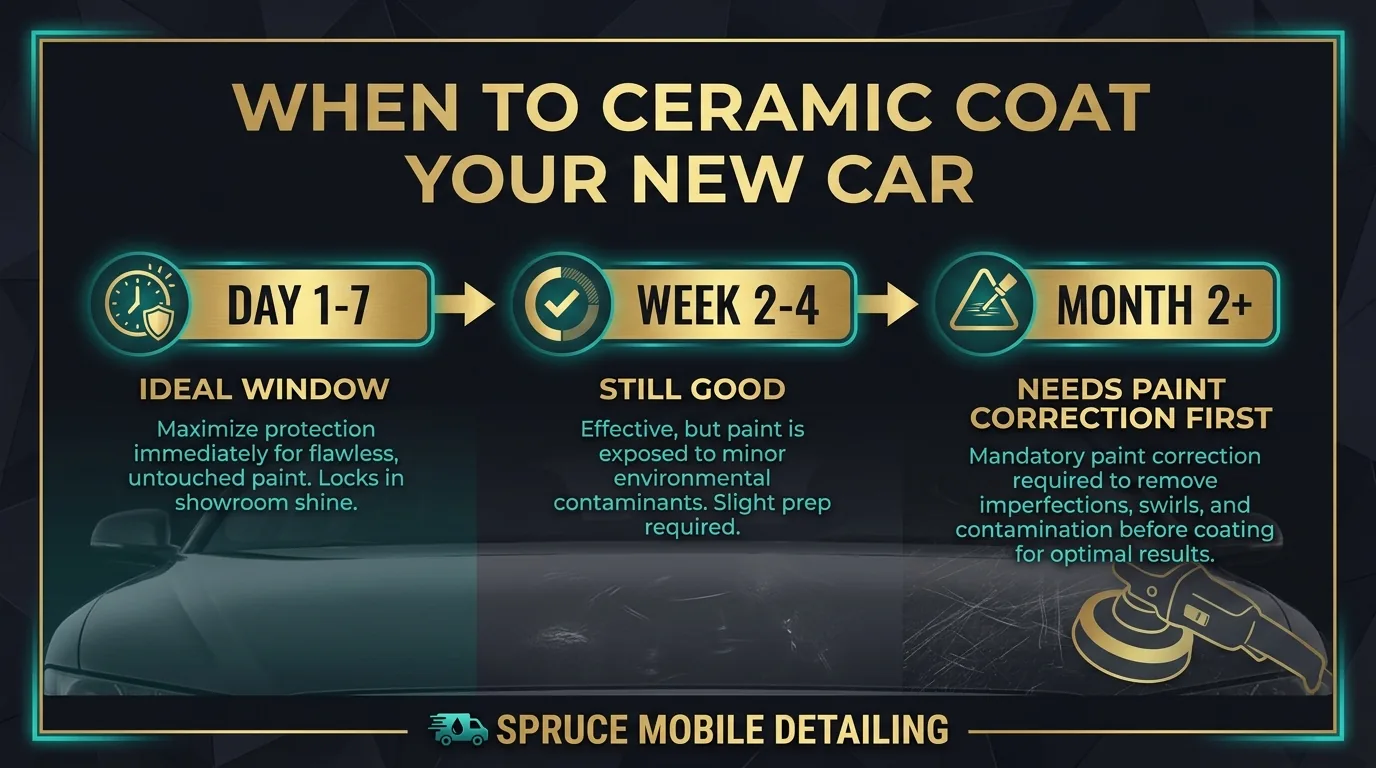
Within the first 2 weeks of ownership is ideal. The paint has had minimal exposure to environmental damage, prep work is minimal, and you start benefiting from the coating's protection immediately.
Within the first 3 months is still great. There will be slightly more contamination to remove, but a new car that's been hand-washed properly will still need minimal correction.
After 6 months to a year, you're likely looking at more prep work. Swirl marks from washing accumulate, UV damage begins, and the total investment in correction + coating starts to climb.
If you're buying a new car and considering protection, here's what we suggest: drive it home carefully, don't take it through any automatic car washes, and give us a call. We'll come to you anywhere in Douglas County, from Castle Rock to Parker to Centennial, do a full inspection, and put together a protection plan that fits your vehicle and budget.
And if the dealer offers you their paint protection package? Politely decline. You'll get better products, better application, and better results from a dedicated detailing professional who does this every day.
FREQUENTLY ASKED QUESTIONS
Is dealer ceramic coating the same as professional ceramic coating?
No. Dealer-applied ceramic coatings are typically consumer-grade spray coatings applied quickly without proper paint correction or surface preparation. Professional ceramic coatings like System X and Glidecoat are thicker, harder, and more durable products applied by professional installers after thorough paint correction and decontamination. The difference in longevity and protection is significant.
How much does it cost to ceramic coat a new car?
Ceramic coating a new car typically costs less than coating an older vehicle because less paint correction is needed. For most new vehicles, expect to invest $800-$1,500 depending on the vehicle size, coating product, and package selected. That covers paint correction, surface preparation, coating application, and curing.
Should I ceramic coat or get PPF on a new car?
They serve different purposes and work best together. PPF (paint protection film) provides physical protection against rock chips, scratches, and road debris on high-impact areas like the front bumper, hood, and mirrors. Ceramic coating provides chemical protection, UV resistance, and hydrophobic properties across the entire vehicle. For maximum protection, many owners choose PPF on the front end and ceramic coating on the rest.
Can I wash my new car before getting it ceramic coated?
Yes, but only by hand with proper two-bucket wash technique and clean microfiber mitts. Avoid automatic car washes entirely. If possible, keep washes to a minimum and let us handle the full decontamination and prep during the coating appointment.