Wax: Pros, Cons, and Best For
Car wax is the classic. Your dad probably used it, and there is a reason it has been around for over a century. Wax, typically made from carnauba (a natural plant wax) or a blend of natural and synthetic ingredients, creates a warm, deep glow on paint that many enthusiasts genuinely prefer over any other product.
Pros:
- Beautiful warm finish: Carnauba wax produces a depth of shine that is hard to replicate. It looks particularly stunning on dark and metallic paints.
- Easy to apply: You can apply wax by hand in your garage with minimal experience. It is forgiving and hard to mess up.
- Affordable: A quality carnauba wax costs $15 to $30 for a jar that lasts multiple applications.
- Safe for all paints: Wax does not bond chemically. It sits on top of the paint, so there is zero risk of damaging the surface.
Cons:
- Short lifespan: 2 to 8 weeks, depending on the product and conditions. In Colorado's intense UV, expect closer to 2 to 4 weeks.
- Minimal protection: Wax provides a thin barrier against water and UV, but it offers very little chemical resistance against bird droppings, tree sap, or road salt.
- Frequent reapplication: You are waxing every month or two to maintain continuous protection, which adds up in time and cost.
- Melts in heat: Carnauba wax softens around 180 degrees Fahrenheit. On a black car in a Colorado summer, surface temperatures can exceed that easily.
Best for: Car enthusiasts who enjoy the hands-on ritual of waxing, show cars that are stored in garages, and vehicles where the owner wants maximum visual warmth in the finish. Also a solid budget option if you do not mind the frequent reapplication.
Sealant: Pros, Cons, and Best For
Paint sealants are synthetic polymer-based products that were designed to address wax's biggest weakness: durability. They bond to paint more effectively than wax and last significantly longer.
Pros:
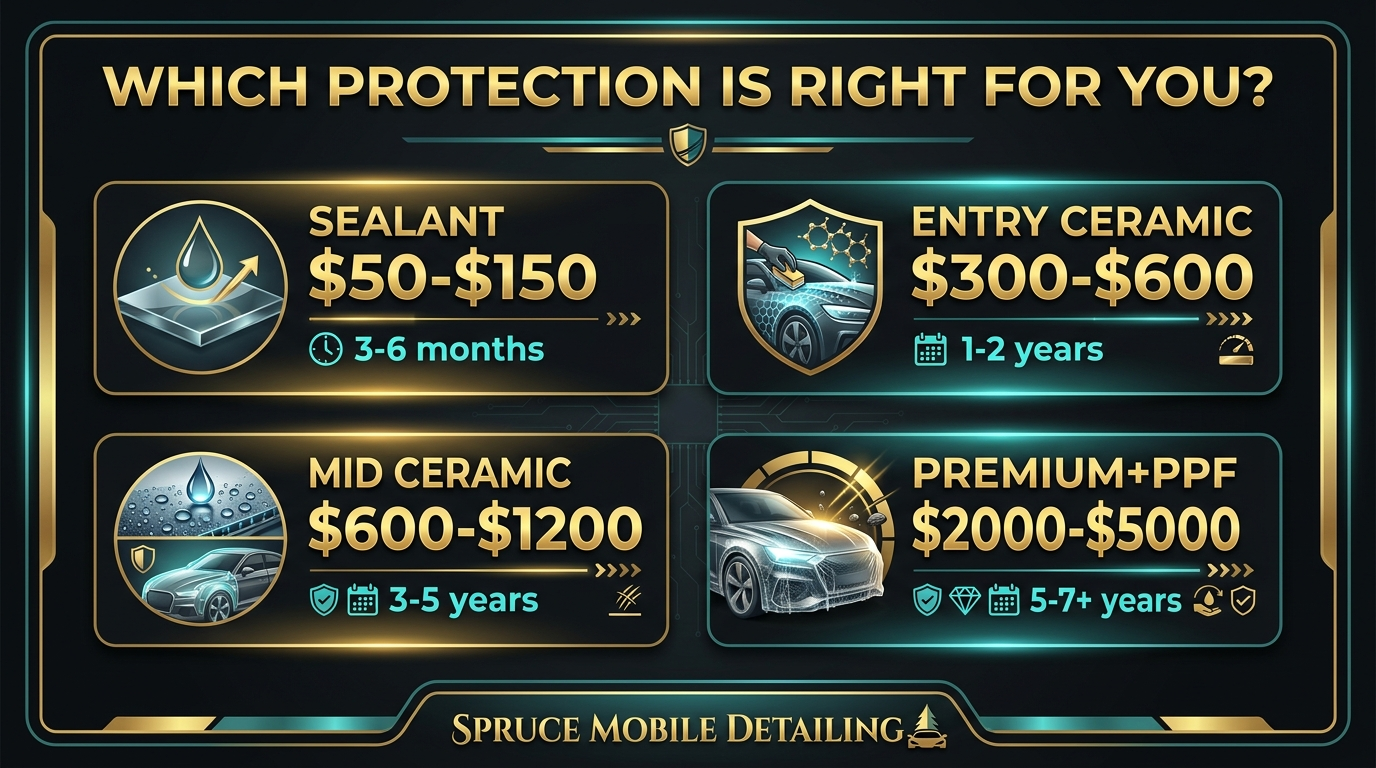
- Longer lasting: 3 to 6 months per application. Some premium sealants claim up to 12 months, though 4 to 6 months is more realistic in Colorado.
- Better UV protection: Synthetic polymers block UV more effectively than carnauba wax. This matters a lot at our altitude.
- Good chemical resistance: Sealants resist acid rain, bird droppings, and light chemical exposure better than wax.
- Easy maintenance: Sealants create a slick surface that sheds water and dirt well.
- Affordable: $15 to $40 for a bottle. Professional application runs $100 to $200.
Cons:
- Less visual warmth: Sealants produce a glassy, reflective shine rather than the deep warmth of carnauba. Some people find it looks slightly "plastic."
- Still temporary: You are reapplying 2 to 4 times per year to maintain protection.
- No scratch resistance: Like wax, sealants do not add any meaningful hardness to your paint surface.
Best for: Daily drivers where the owner wants better-than-wax protection without the cost of ceramic coating. Also great as a maintenance layer on top of ceramic coating for extra hydrophobic properties. Sealants are a solid middle ground for most drivers in Castle Rock and Highlands Ranch who want something better than wax but are not ready for a coating investment.
Ceramic Coating: Pros, Cons, and Best For
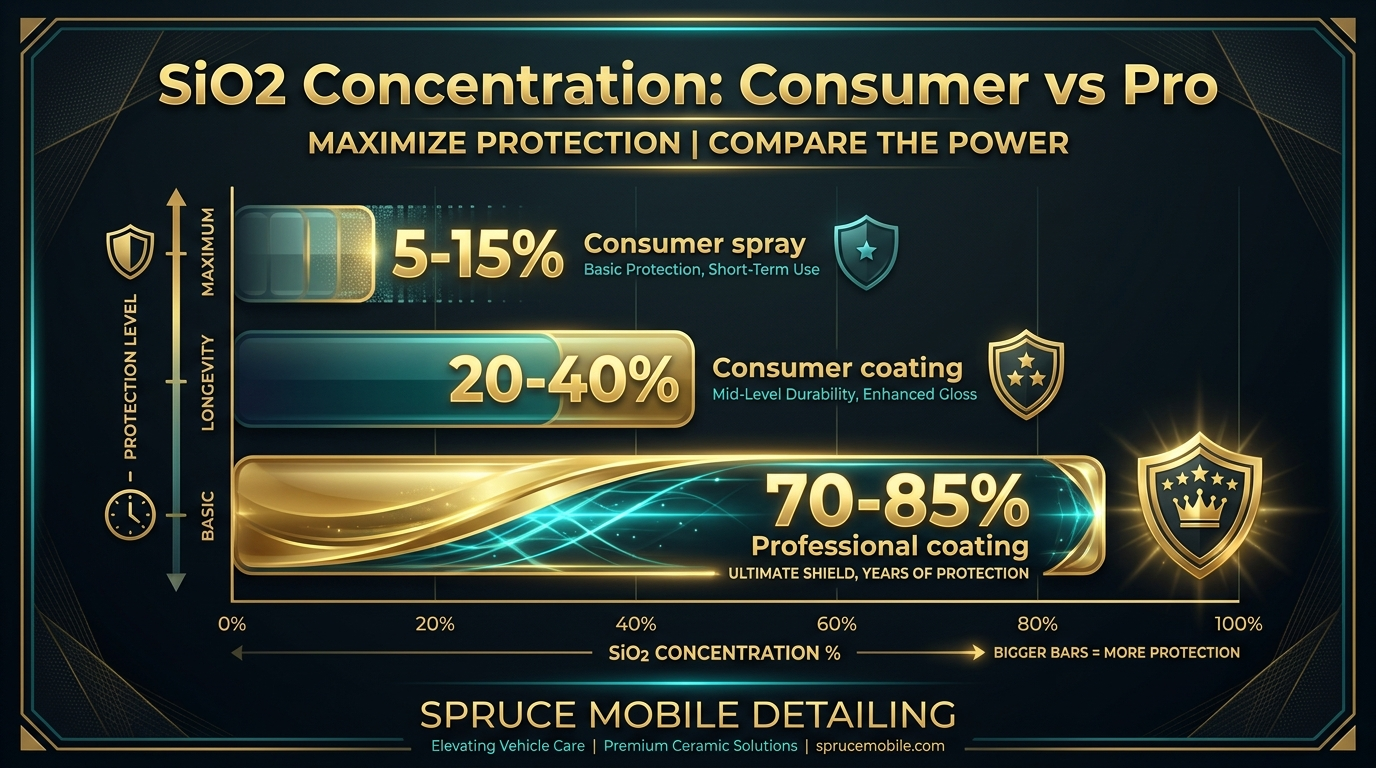
Ceramic coating is a liquid polymer (typically silicon dioxide or SiO2) that chemically bonds with your vehicle's clear coat. Unlike wax and sealant that sit on top of the paint, ceramic coating becomes a semi-permanent part of the paint surface.
Pros:
- Exceptional longevity: Professional ceramic coatings last 2 to 9 years. One application replaces years of waxing and sealing.
- Superior UV protection: This is where ceramic coating really shines in Colorado. The SiO2 layer blocks significantly more UV radiation than wax or sealant, which is critical at 6,000+ feet elevation where UV is 25 to 30% stronger than sea level.
- Strong chemical resistance: Bird droppings, tree sap, mag chloride, and bug splatter are much less likely to etch coated paint.
- Hydrophobic properties: Water beads and sheets off the surface, taking dirt with it. Your car stays cleaner longer.
- Minor scratch resistance: Ceramic coating adds hardness (9H pencil hardness) that helps prevent light swirl marks from washing.
- Enhanced gloss: A properly applied ceramic coating produces a deep, wet-look gloss that actually improves over time as the coating fully cures.
Cons:
- Higher upfront cost: $500 to $2,500 depending on the tier and vehicle size. This is the primary barrier for most people.
- Professional application required: True ceramic coating requires proper surface preparation and controlled application. DIY ceramic coatings exist but deliver a fraction of the performance.
- Not maintenance-free: You still need to wash your car. The coating makes it easier and less frequent, but it is not "apply and forget."
- Will not prevent rock chips: For that, you need paint protection film (PPF).
Best for: Vehicle owners who plan to keep their car for 3+ years, anyone who parks outside regularly (especially in Colorado), people who want to reduce their maintenance time, and anyone who has invested in paint correction and wants to protect the results.
Free Quote
Ready to Protect Your Paint?
We come to your home or office in Castle Rock and throughout Douglas County.
Comparison Table
Here is how all three options stack up side by side for Colorado drivers.
- Durability: Wax lasts 2 to 8 weeks. Sealant lasts 3 to 6 months. Ceramic coating lasts 2 to 9 years.
- UV Protection: Wax provides minimal UV defense. Sealant offers moderate UV blocking. Ceramic coating delivers the best UV protection available, which is especially important at Colorado altitude.
- Chemical Resistance: Wax has very little resistance to bird droppings, sap, or salt. Sealant has moderate resistance. Ceramic coating has strong resistance.
- Hydrophobic Effect: Wax provides mild water beading. Sealant provides good water sheeting. Ceramic coating provides excellent water beading and self-cleaning properties.
- Scratch Resistance: Wax adds none. Sealant adds none. Ceramic coating adds minor resistance to light swirl marks.
- Cost Per Year: Wax costs roughly $600 to $900 per year if applied monthly by a professional. Sealant costs $200 to $600 per year (2 to 3 applications). Ceramic coating costs $100 to $500 per year when you divide the one-time cost over its lifespan.
- Application Difficulty: Wax is easy (DIY friendly). Sealant is easy (DIY friendly). Ceramic coating requires professional application for best results.
- Visual Finish: Wax gives a warm, deep glow. Sealant gives a glossy, reflective finish. Ceramic coating gives a deep, wet-look gloss.
Recommendation by Situation
There is no single right answer. It depends on your vehicle, your budget, and how you use your car. Here is our honest recommendation based on real scenarios we see every day.
"I just want something cheap and easy." Go with a paint sealant. Apply it yourself every 4 months. It costs $30 a bottle and gives you significantly better protection than wax. For Colorado, this is the minimum we would recommend for any car that parks outside.
"I love detailing my car on weekends." Use carnauba wax over a base layer of sealant. The sealant gives you lasting protection, and the wax adds that gorgeous warm depth. Reapply the wax monthly and the sealant every 6 months. This layered approach is popular with car enthusiasts in the area.
"I want the best protection and the least work." Ceramic coating is the clear choice. The upfront cost is higher, but the long-term value is there, especially in Colorado. You get the best UV protection, the best chemical resistance, and the easiest maintenance. Most of our customers in Castle Rock and Highlands Ranch who choose ceramic coating tell us they wish they had done it sooner.
"I'm keeping this car a long time and want ultimate protection." Combine paint protection film (PPF) on the front end with ceramic coating on the rest of the vehicle. PPF handles rock chips and physical impacts, ceramic coating handles UV, chemicals, and maintenance. This is the gold standard for paint protection.
"My car is a lease I'm returning in a year." Stick with sealant. Maybe an entry-level ceramic coating if you want reduced maintenance for the remaining term. There is no point investing in a 5-year coating for a car you will not own in 12 months.
Whatever you choose, the most important thing is that you choose something. Unprotected paint in Colorado deteriorates faster than most people realize. If you want help figuring out what makes sense for your specific vehicle, reach out for a free consultation or call (720) 971-2020.
FREQUENTLY ASKED QUESTIONS
Can I apply wax over ceramic coating?
You can, but there is no real benefit. Wax sits on top of the ceramic coating and adds a temporary layer that actually interferes with the coating's hydrophobic properties. If you want to boost your ceramic coating between professional maintenance, use a ceramic-specific spray booster from the same product line as your coating.
Is ceramic coating worth it for Colorado drivers?
Colorado is one of the best places to invest in ceramic coating. The combination of intense UV at altitude, winter mag chloride, red dirt, and extreme temperature swings means your paint faces more abuse than in most climates. Ceramic coating's UV protection and chemical resistance directly address Colorado's biggest paint threats.
How do I know if my car has ceramic coating or just wax?
The easiest test is the water bead test. Pour water on a section of paint and observe. Wax produces flat, wide water beads that cling to the surface. Ceramic coating produces tight, round beads that roll off quickly at any angle. Ceramic coated surfaces also feel noticeably slicker than waxed surfaces.
What is the best paint protection for a black car in Colorado?
Black paint shows every swirl mark, water spot, and defect. For black cars in Colorado, we recommend ceramic coating because it reduces water spotting, adds scratch resistance against light swirl marks, and protects against UV fading. A paint correction before coating ensures you start with a flawless surface.