Why Teslas Need Different Care
If you own a Tesla in Castle Rock or Parker, you have probably already noticed something about the paint: it marks easily. Tesla's paint is softer and thinner than most other manufacturers. This is not a myth or internet exaggeration. It is a documented characteristic that Tesla owners and detailers deal with regularly.
Tesla's factory clear coat is typically thinner than average, measuring around 3 to 4 mils (thousandths of an inch) compared to 5 to 8 mils on many other brands. This means less material between the world and your base coat. Swirl marks, wash marring, and light scratches show up faster and more visibly than on a Honda or a BMW.
What this means for detailing:
- Automatic car washes are a hard no. The spinning brushes that are merely bad for most cars are genuinely destructive on Tesla paint. One trip through a tunnel wash can leave visible swirl marks.
- Wash technique matters more. A proper hand wash with the two-bucket method and quality microfiber is not optional, it is essential. Skipping the pre-rinse or using a dirty wash mitt will leave marks.
- Paint correction requires a careful approach. With less clear coat to work with, aggressive cutting compounds are risky. A skilled detailer knows to check paint thickness with a gauge before correcting a Tesla.
- Protection is more important, not less. Because the paint is softer and thinner, ceramic coating and PPF are not luxury add-ons for Teslas. They are genuine protection against a surface that cannot afford to lose clear coat depth.
Colorado's climate makes this worse. The intense UV at altitude accelerates clear coat degradation on paint that is already thin. Road debris and mag chloride take a heavier toll when there is less protective material to begin with.
Model-by-Model Considerations (3, Y, S, X)
Every Tesla shares the same general paint characteristics, but each model has its own detailing quirks.
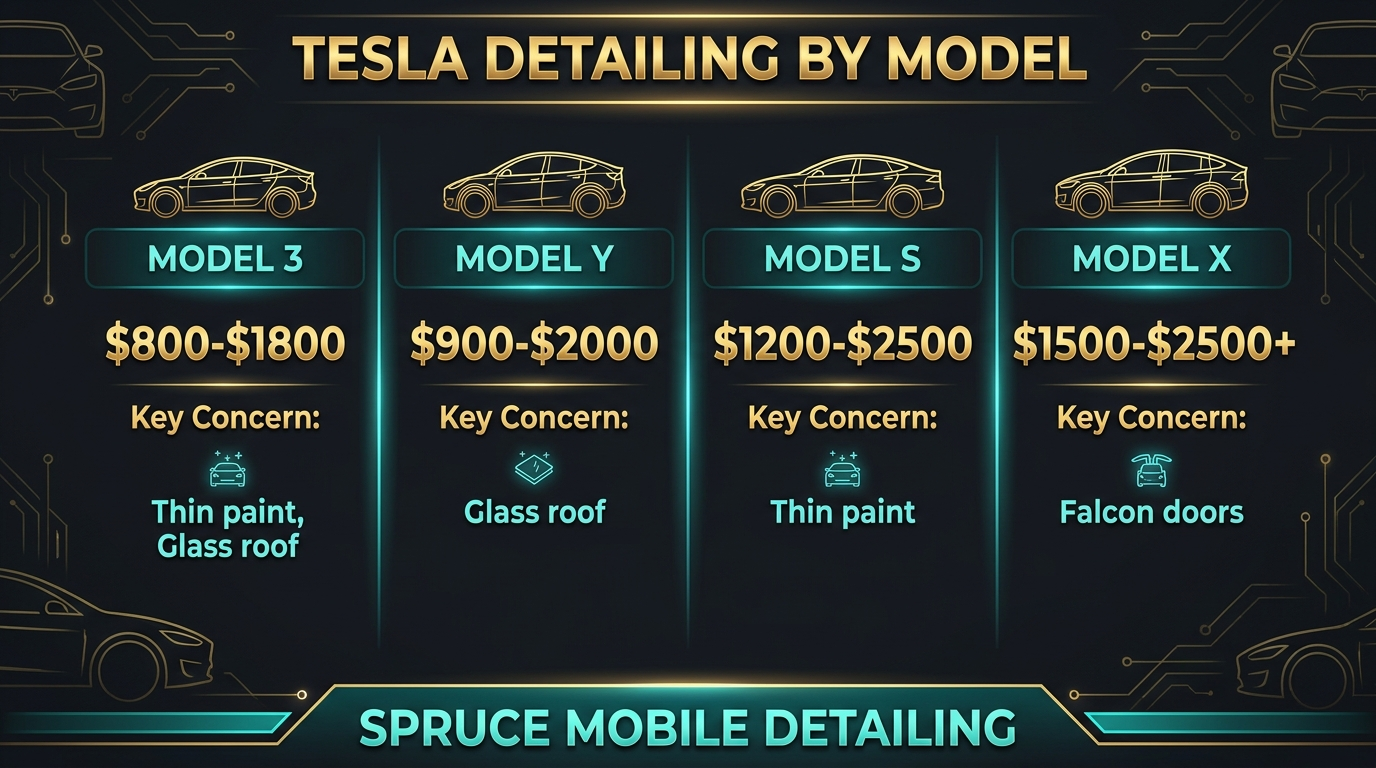
Model 3: By far the most common Tesla we see in Douglas County. The paint quality has improved over the years, but early Model 3s (2018 to 2020) are particularly prone to thin spots and orange peel texture. The flush door handles collect less dirt than traditional handles but the panel gaps can trap grime. The trunk lip is a common spot for swirl marks because it is a narrow, hard-to-reach area that gets wiped carelessly.
Model Y: Very similar to the Model 3 in terms of paint and interior materials. The larger rear hatch area picks up more road spray and dust, so it needs more frequent attention. The rear bumper takes a beating from loading and unloading cargo. If you have roof rack crossbars, the mounting points need to be cleaned carefully to prevent debris from grinding against the paint.
Model S: The premium Tesla. Generally has slightly better paint quality than the 3 and Y, but the larger body panels show imperfections more easily. The frameless windows can introduce more dust into the interior if the seals wear. The panoramic roof is the largest glass surface of any Tesla and requires careful cleaning (more on that below).
Model X: The falcon wing doors are the unique challenge. The complex hinge mechanisms and door seals collect dirt and grime that can drip onto the paint when the doors open. We make sure to clean these hinge areas during every detail. The massive windshield and roof glass also mean more glass cleaning time and more care to avoid streaks.
White Interior? Here's How to Keep It Clean
Tesla's white vegan leather interior looks stunning for about a week. Then reality sets in. Jeans transfer dye onto the seats. Sunscreen leaves orange stains. Dark clothing creates shadow marks on the bolsters. Every scuff shows.
Here is the thing though: Tesla's white interior is actually easier to maintain than most people think, as long as you are proactive about it.
Prevention is everything:
- Clean jeans dye transfer immediately. Fresh dye transfer wipes off easily with a baby wipe or damp microfiber cloth. If you let it sit for days, it bonds and requires professional cleaning.
- Apply a fabric and leather protectant. A quality interior coating or protectant creates a barrier that makes dye transfer and stains easier to wipe off. We apply this to every white Tesla interior we detail.
- Wipe down the seats weekly. A quick 5-minute wipe with a damp microfiber cloth prevents buildup. It sounds excessive, but it takes less time than trying to remove stains that have set for a month.
When stains set in:
For stubborn dye transfer, we use a dedicated interior cleaner with a soft brush to gently lift the dye without damaging the material's coating. Baby wipes work for light surface dye, but set-in stains need proper cleaning products.
For sunscreen and body oil stains, an all-purpose cleaner at light dilution works well. The key is not to scrub aggressively. Tesla's vegan leather has a matte finish coating that protects it, and harsh scrubbing can wear through that coating.
If your white interior is already heavily stained, a professional interior detail can restore it in most cases. We have brought back white interiors that owners had given up on. The earlier you address it, the better the results.
Free Quote
Own a Tesla in Castle Rock?
We come to your home or office in Castle Rock and throughout Douglas County.
Glass Roof Cleaning Without Damage
Tesla's glass roofs are beautiful. They are also a pain to clean properly. The interior surface has a UV coating that can be damaged by the wrong products, and the exterior collects water spots and bird droppings like any other surface, just in a place that is harder to reach.
What NOT to use on the interior glass:
- Ammonia-based glass cleaners (like most blue glass cleaners). These can degrade the UV coating on the interior surface of the roof glass over time.
- Abrasive pads or rough towels. The interior glass coating scratches more easily than regular automotive glass.
- Razor blades. Some detailers use razor blades on regular glass to remove stuck-on contaminants. Never do this on a Tesla roof.
What to use:
An ammonia-free glass cleaner with a clean, high-quality microfiber cloth. Clean in straight lines rather than circles to avoid streaking. For the exterior, a standard automotive glass cleaner is fine since there is no special coating on the outside.
Water spots on the glass roof: Colorado's hard water plus our intense sun creates water spots that can be stubborn. A dedicated water spot remover (acid-based, for exterior use only) handles these. For prevention, the hydrophobic effect of ceramic coating applied to the glass roof causes water to bead and roll off, dramatically reducing water spot formation.
The roof glass panel also tends to accumulate tree sap and bird droppings that go unnoticed because you do not look at the roof of your car often. We always check the glass roof during a detail and address anything that has landed there.
Can You Ceramic Coat a Tesla?
Not only can you ceramic coat a Tesla, we would argue it is one of the best vehicles to coat. Here is why.
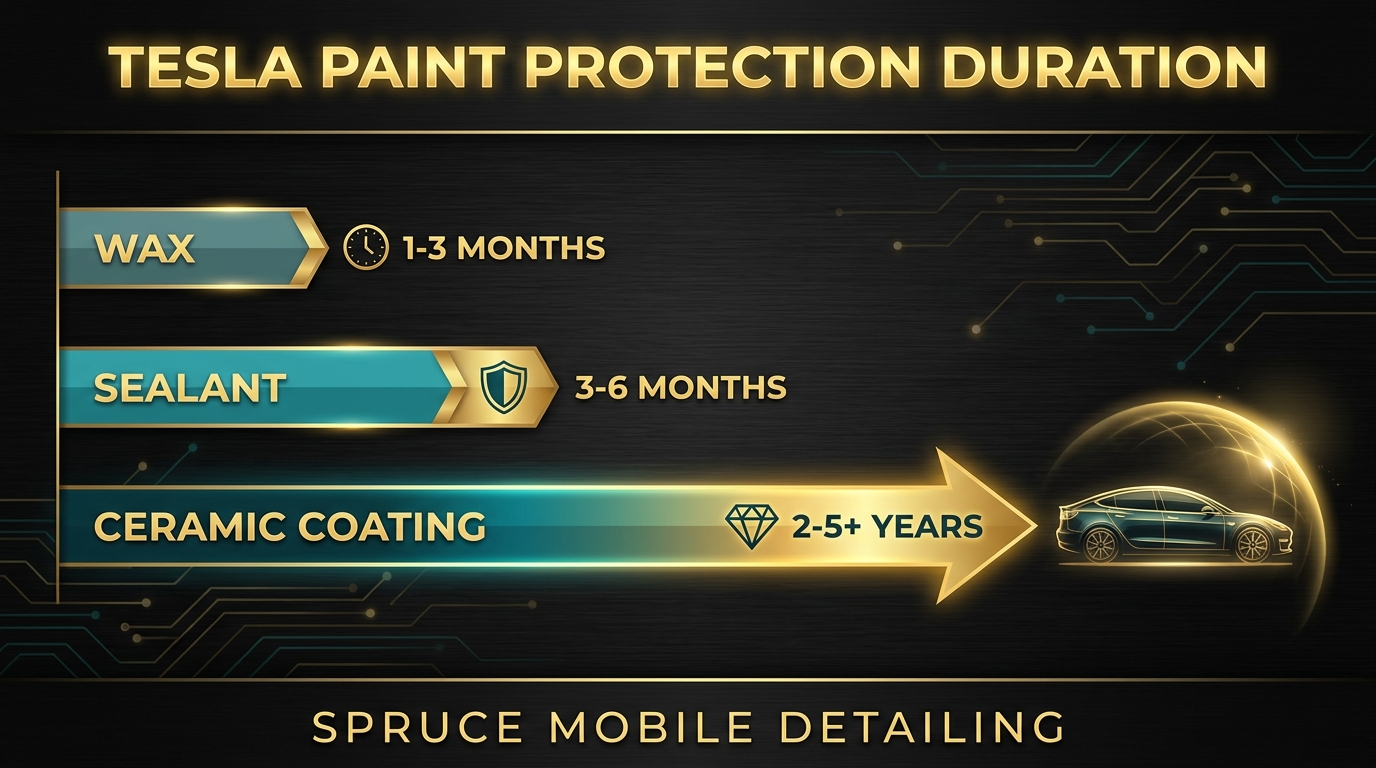
Tesla's soft, thin paint is more vulnerable to UV, chemical etching, and swirl marks than most cars. Ceramic coating directly addresses all three of those weaknesses. The SiO2 layer adds hardness that Tesla's factory clear coat lacks, blocks UV that would otherwise accelerate the already-thin clear coat's degradation, and creates a chemical-resistant barrier against bird droppings, tree sap, and mag chloride.
What a ceramic coating does for your Tesla:
- Adds a sacrificial layer. Instead of UV and chemicals degrading your paint's thin clear coat, they degrade the ceramic coating, which can be maintained and reapplied.
- Reduces wash swirling. The slick, hydrophobic surface means less contact pressure is needed during washing. Less pressure equals fewer swirl marks on soft paint.
- Easier cleaning. Dirt, bugs, and road grime slide off coated paint more easily. You spend less time and effort on every wash, which means less opportunity to introduce swirl marks.
- Glass roof protection. We can coat the exterior glass roof with a ceramic glass coating that repels water, reduces water spots, and makes cleaning easier.
Should you coat a brand new Tesla?
We recommend it. New Teslas often arrive from the factory with paint imperfections (orange peel, light swirl marks from transport handling). A light paint correction followed by ceramic coating gives you the best starting point. The sooner you protect that thin clear coat, the longer it lasts.
For Tesla owners in Castle Rock and Parker, we are System X and Glidecoat certified and detail Teslas regularly. We understand the paint, the interiors, and the specific care these vehicles need. Get a free quote or call (720) 971-2020 to schedule your Tesla detail.
FREQUENTLY ASKED QUESTIONS
Is Tesla paint really softer than other cars?
Yes. Tesla's factory paint and clear coat are documented to be thinner and softer than most other manufacturers. Typical Tesla clear coat measures 3 to 4 mils compared to 5 to 8 mils on many other brands. This makes Teslas more prone to swirl marks, wash marring, and clear coat damage from environmental exposure.
Can I take my Tesla through an automatic car wash?
We strongly advise against it. The spinning brushes in tunnel washes cause visible swirl marks on Tesla's soft paint, often after just one wash. If you must use an automated option, choose a touchless car wash only. Hand washing with the two-bucket method is the safest approach for any Tesla.
How do I clean jean dye off white Tesla seats?
Fresh dye transfer wipes off easily with a baby wipe or damp microfiber cloth. For set-in stains, use a dedicated automotive interior cleaner with a soft brush. Do not scrub aggressively, as Tesla's vegan leather has a protective matte coating that can be worn through. Applying an interior protectant regularly makes future dye transfer easier to remove.
How much does it cost to ceramic coat a Tesla?
Professional ceramic coating for a Tesla Model 3 or Y typically runs $800 to $2,000 depending on the coating tier and whether paint correction is needed. Model S and X are slightly more due to larger surface area. This includes full surface preparation, decontamination, and light paint correction before the coating is applied.