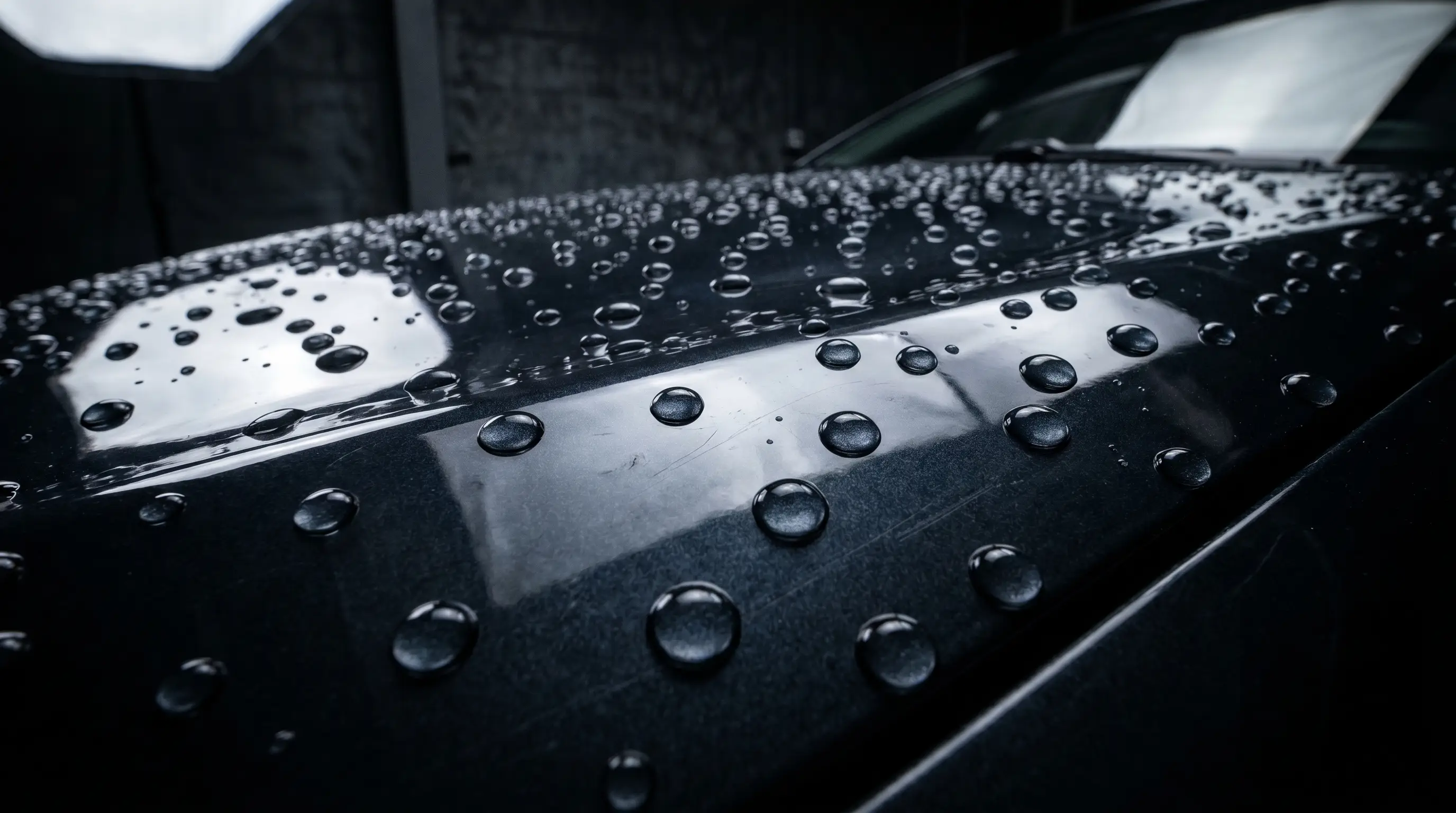
How Long Does Ceramic Coating Really Last?
When customers in Castle Rock and Douglas County ask "how long does ceramic coating last," they deserve a real answer, not a sales pitch. The truth is that ceramic coating longevity varies significantly based on the product quality, application technique, and how the vehicle is maintained afterward.
Here's the straight answer: professional ceramic coatings last 2 to 9 years. Consumer-grade products last weeks to months. The difference comes down to chemistry, application, and aftercare.
As System X and Glidecoat certified installers at Spruce Mobile Detailing, we've applied hundreds of coatings and seen firsthand what lasts and what doesn't. Let's break down exactly what determines how long your coating will protect your paint.
Ceramic Coating Lifespan by Tier
Not all ceramic coatings are created equal. The lifespan depends primarily on the product tier:
Consumer-Grade Spray Coatings (2 to 8 weeks)
The bottles you buy at auto parts stores. These contain 10 to 30% SiO2 and provide a temporary hydrophobic effect. They're essentially glorified sealants that wash away with a few rain storms or car washes. Not true ceramic coatings.
Entry-Level Professional Coatings (1 to 2 years)
Entry-level professional coatings are the most accessible professional option, applied by professionals using products with 50 to 70% SiO2 and providing genuine ceramic protection. Good for customers who want real protection without a long-term commitment, or for lease vehicles you'll return in 2 to 3 years.
Mid-Range Professional Coatings (3 to 5 years)
Our most popular tier represents an excellent balance of protection and value. Products like System X Crystal SS and Glidecoat Nano with 70 to 85% SiO2 content, applied in controlled conditions with proper surface preparation. This is the sweet spot for most vehicle owners, offering strong protection and multi-year durability at a reasonable investment.
Premium Multi-Layer Coatings (5 to 9 years)
Top-tier products like System X Max applied in multiple layers. 85 to 90% SiO2 with proprietary bonding agents. These coatings come with manufacturer warranties and can last up to 9 years with proper maintenance. Best for luxury vehicles, new cars, and owners who want the longest-lasting protection available, it's a significant investment that pays off over many years of ownership.
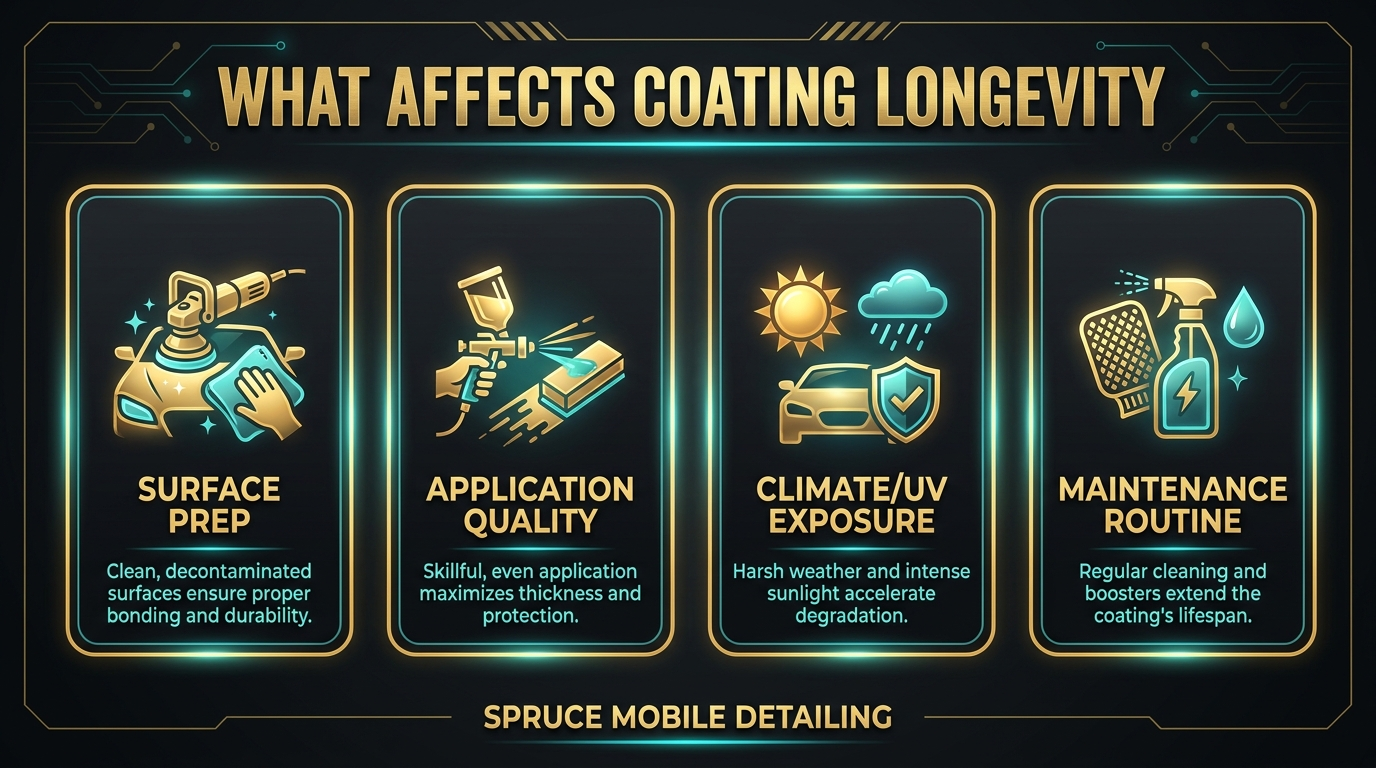
What Affects Ceramic Coating Longevity?
Even within the same product tier, coating lifespan varies based on several real-world factors:
1. Surface Preparation Quality
This is the #1 factor that most people overlook. A ceramic coating is only as good as the surface it bonds to. Proper preparation includes:
- Thorough wash and decontamination
- Iron remover treatment
- Clay bar treatment to remove embedded contaminants
- IPA wipe-down to remove all oils and polishing residue
Skipping or rushing preparation means the coating bonds to contaminants rather than bare clear coat. This leads to premature failure. The coating peels or wears away unevenly. It's why "budget" ceramic coating jobs that skip surface preparation often fail within a year.
2. Application Technique
Professional application involves applying the coating in thin, even layers and ensuring consistent coverage. High spots (areas with too much product) create uneven wear. Missed spots leave paint unprotected. Curing conditions matter too, since humidity and temperature affect how the coating bonds.
3. Colorado's Climate
Colorado's climate is particularly challenging for ceramic coatings and for uncoated paint. Key factors:
- UV intensity: At 6,000+ feet elevation (Castle Rock), UV is 25 to 30% stronger than at sea level. This is ceramic coating's biggest test and its biggest value. The coating absorbs UV that would otherwise degrade your clear coat.
- Temperature swings: 50°F temperature swings in a single day are common here. Coatings must be flexible enough to expand and contract with the paint.
- Road salt and mag chloride: Winter road treatments are corrosive. Ceramic coating resists chemical damage, but prolonged exposure to mag chloride can slowly degrade coatings. Regular winter washes help.
- Dry air and dust: Colorado's low humidity means airborne dust and grit constantly contact your vehicle, especially for owners in Elizabeth, Franktown, and Larkspur where unpaved roads amplify the problem. Ceramic coating's slick surface helps dust slide off rather than embed.
In our experience, ceramic coatings in Colorado last about 80 to 90% of their rated lifespan compared to mild climates, primarily due to UV intensity. A coating rated for 5 years may last 4 to 4.5 years here.
How to Tell When Your Ceramic Coating Is Wearing Off
Ceramic coatings don't fail suddenly. They degrade gradually. Here are the signs:
- Water behavior changes: When your coating is fresh, water beads tightly and sheets off the surface. As it wears, beading becomes less defined and water starts to "stick" to the paint. This is the earliest indicator.
- Dirt sticks more easily: A healthy coating's slick surface repels dirt. When you notice your car getting dirty faster than it used to, the coating is thinning.
- Washing becomes harder: If contaminants that used to rinse off easily now require scrubbing, the coating's hydrophobic layer is weakening.
- Gloss reduction: The deep, wet-look gloss of a fresh coating gradually diminishes as the coating wears. This is subtle and happens slowly.
- Water spots become permanent: A strong coating prevents water spots from etching into paint. If you're getting water spots that won't come off with a simple wash, the coating is losing its chemical resistance.
When you notice these signs, it's time to either apply a maintenance booster (for mid-life coating) or reapply a full coating (for end-of-life coating).
How to Make Your Ceramic Coating Last Longer
Proper aftercare can extend your coating's lifespan by 20 to 30%. Here are the maintenance practices that actually matter:
1. Wash Correctly
Use the two-bucket wash method with pH-neutral soap. Avoid automatic car washes. The brushes and harsh chemicals degrade ceramic coatings faster than anything else. Hand washing or touchless car washes are safe. Wash every 2 to 3 weeks, or more frequently in winter when salt is on the roads.
2. Apply Maintenance Boosters
Most professional coating lines offer spray-on "booster" products that refresh the hydrophobic layer between full applications. Using a maintenance booster every 3 to 6 months adds significant lifespan. System X and Glidecoat both offer boosters that we recommend to our customers in Castle Rock, Parker, Littleton, and throughout Douglas County.
3. Address Contaminants Quickly
Bird droppings, tree sap, and bug splatter should be removed within 24 to 48 hours. While ceramic coating protects against these contaminants, prolonged exposure to acidic substances can still cause localized damage to the coating layer.
4. Avoid Harsh Chemicals
Dish soap, bleach, and all-purpose cleaners strip the coating. Stick to ceramic-coating-safe car wash soaps. No cutting corners.
5. Park Smart
When possible, park in shade or in a garage. While ceramic coating protects against UV, reducing UV exposure extends the coating's life. If you're in Highlands Ranch, Centennial, Lone Tree, or Castle Pines with a garage, use it.
6. Annual Inspections
Have your coating inspected annually by a professional. We can assess the coating's condition, apply a booster if needed, and address any areas where the coating may be thinning. This preventive approach is far more cost-effective than full reapplication.
Free Quote
Want Long-Lasting Paint Protection?
We come to your home or office in Castle Rock and throughout Douglas County.
Professional vs. DIY: The Longevity Gap
The single biggest factor in coating longevity, bigger than the product itself, is whether it's professionally applied. Here's why the gap is so large:
- Surface preparation: A professional spends 2 to 6 hours on prep before the coating even comes out. Decontamination, correction, and IPA wipe-down create the ideal bonding surface. Most DIY applications skip this entirely.
- Controlled application: Professionals apply coatings in controlled environments where humidity, temperature, and lighting are optimized. A coating applied in a garage at the wrong humidity level will have bonding issues.
- Curing: Professional coatings require specific curing conditions, often 24 to 48 hours of no water exposure and controlled temperature. Professionals manage this process; DIY applicators often get rained on or drive to work the next morning.
- Product quality: Professional-grade coatings (System X, Gtechniq Crystal Serum, Modesta) are only available through certified installers. The consumer products you can buy are fundamentally different formulations.
A consumer DIY product lasting a couple of months doesn't compare to a professional coating lasting 5 years. When you factor in the per-month cost of each approach over several years, professional coating is actually the more economical choice over time, in addition to offering far superior protection. Contact us for a custom quote tailored to your vehicle.
When to Reapply Ceramic Coating
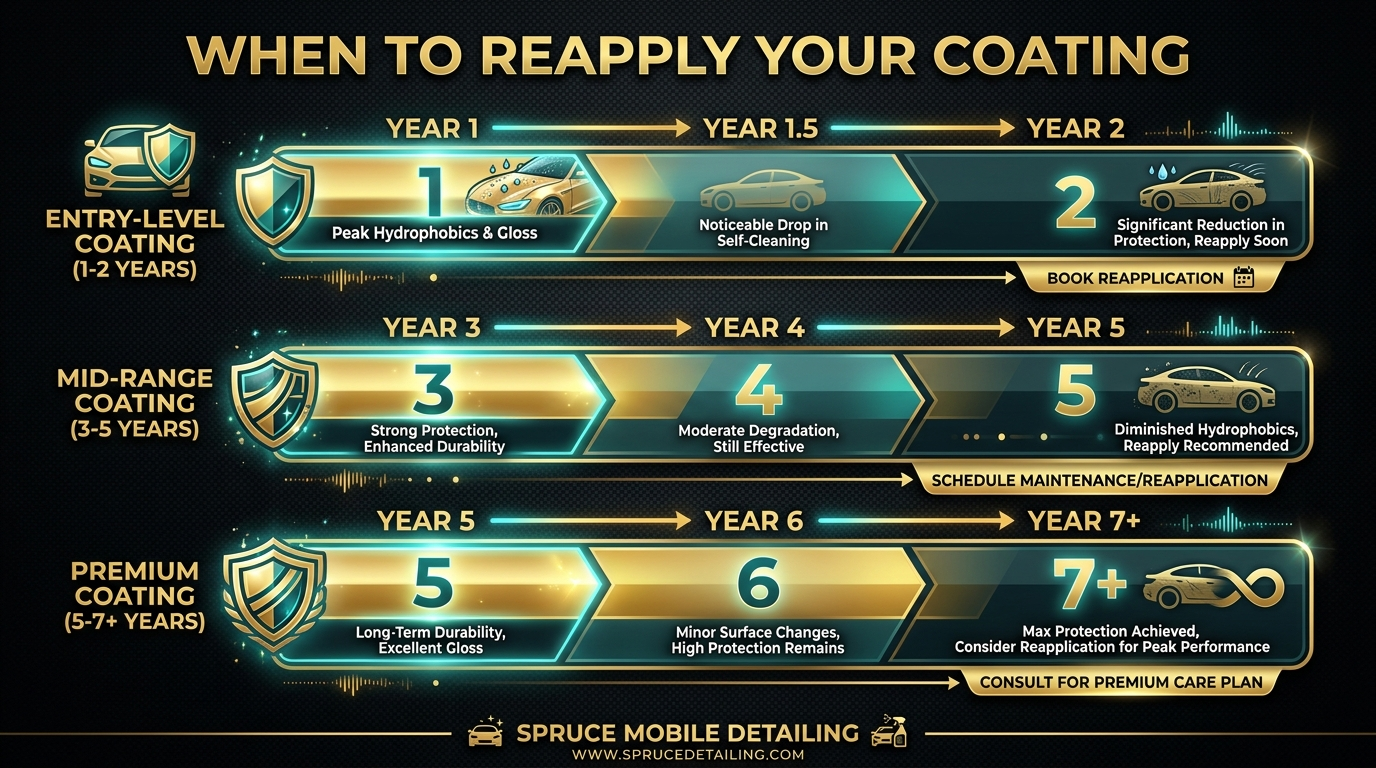
Plan your reapplication before the coating fully fails. Here's a general timeline:
- Entry-level coating (1 to 2 year rated): Begin evaluating at 8 to 12 months. Plan reapplication around 12 to 18 months.
- Mid-range coating (3 to 5 year rated): Begin evaluating at 2 to 3 years. Plan reapplication around 3 to 4 years. Use maintenance boosters throughout to extend to the full rated lifespan.
- Premium coating (5 to 9 year rated): Begin evaluating at 4 to 5 years. Plan reapplication around 5 to 7 years. Manufacturer warranties often cover reapplication if the coating fails prematurely.
Reapplication is typically cheaper than the initial application because the paint preparation is less intensive because you're correcting minor wear rather than years of accumulated damage.
For customers in the Douglas County area, we offer maintenance packages that include annual inspections and discounted reapplication. contact us for details.
The Bottom Line on Ceramic Coating Longevity
Professional ceramic coating lasts 2 to 9 years depending on the product tier, application quality, and maintenance. In Colorado's demanding climate, expect coatings to reach 80 to 90% of their rated lifespan with proper care.
The keys to maximizing longevity are: choosing a certified installer (not just anyone with a bottle), proper surface preparation before application, and consistent aftercare with pH-neutral washes and periodic maintenance boosters.
At Spruce, every ceramic coating job includes comprehensive surface preparation, professional-grade products (System X and Glidecoat), and aftercare guidance specific to Colorado's climate. Get a free quote or call +1 (720) 971-2020 to discuss the right coating for your vehicle.
FREQUENTLY ASKED QUESTIONS
Does ceramic coating last forever?
No. Despite marketing claims of "permanent" protection, all ceramic coatings degrade over time. Professional coatings last 2 to 9 years depending on the tier, while consumer products last only weeks to months. Proper maintenance and periodic booster applications extend the lifespan.
How long does System X ceramic coating last?
System X ceramic coatings range from 2 years (entry-level) to 9+ years (Max tier) depending on the product line. In Colorado's climate with its intense UV, expect to reach approximately 80 to 90% of the rated lifespan with proper maintenance.
Can ceramic coating be removed?
Yes, ceramic coating can be removed through machine polishing with abrasive compounds. This is necessary if the coating has failed unevenly or if you want to start fresh. It's not something you can do with a simple wash. It requires professional equipment and skill.
Does ceramic coating prevent scratches?
Ceramic coating provides minor scratch resistance. It can reduce light swirl marks from washing. However, it will not prevent scratches from keys, rocks, shopping carts, or other hard impacts. For impact protection, paint protection film (PPF) is the better solution.