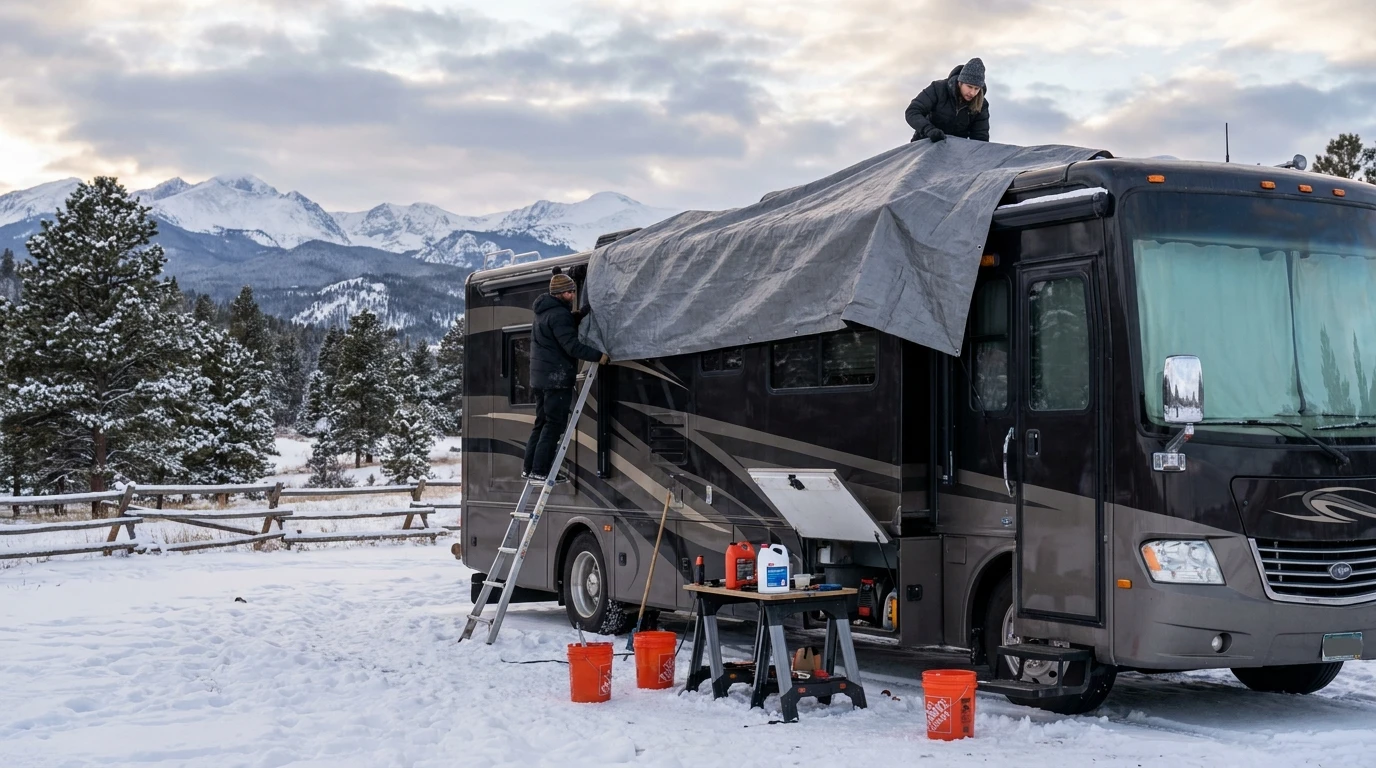
Why Pre-Storage Cleaning Matters
Here's what happens when you park your RV for winter without cleaning it first: every bug splatter, bird dropping, tree sap glob, and road salt residue sits on your finish for 4-6 months. During that time, Colorado's freeze-thaw cycles expand moisture in surface contaminants, driving them deeper into the gel coat. By spring, what would have washed off easily in October is now etched permanently into your finish.
The interior is even worse. Food crumbs you missed become a five-star buffet for mice. Moisture trapped in upholstery and carpet grows into mold. Spills you forgot about stain permanently as they sit undisturbed through winter.
A thorough pre-storage detail takes a few hours. Dealing with the consequences of skipping it takes days and hundreds of dollars more in spring. It's the single best investment you can make before buttoning up your rig for the season.
The Storage Prep Checklist
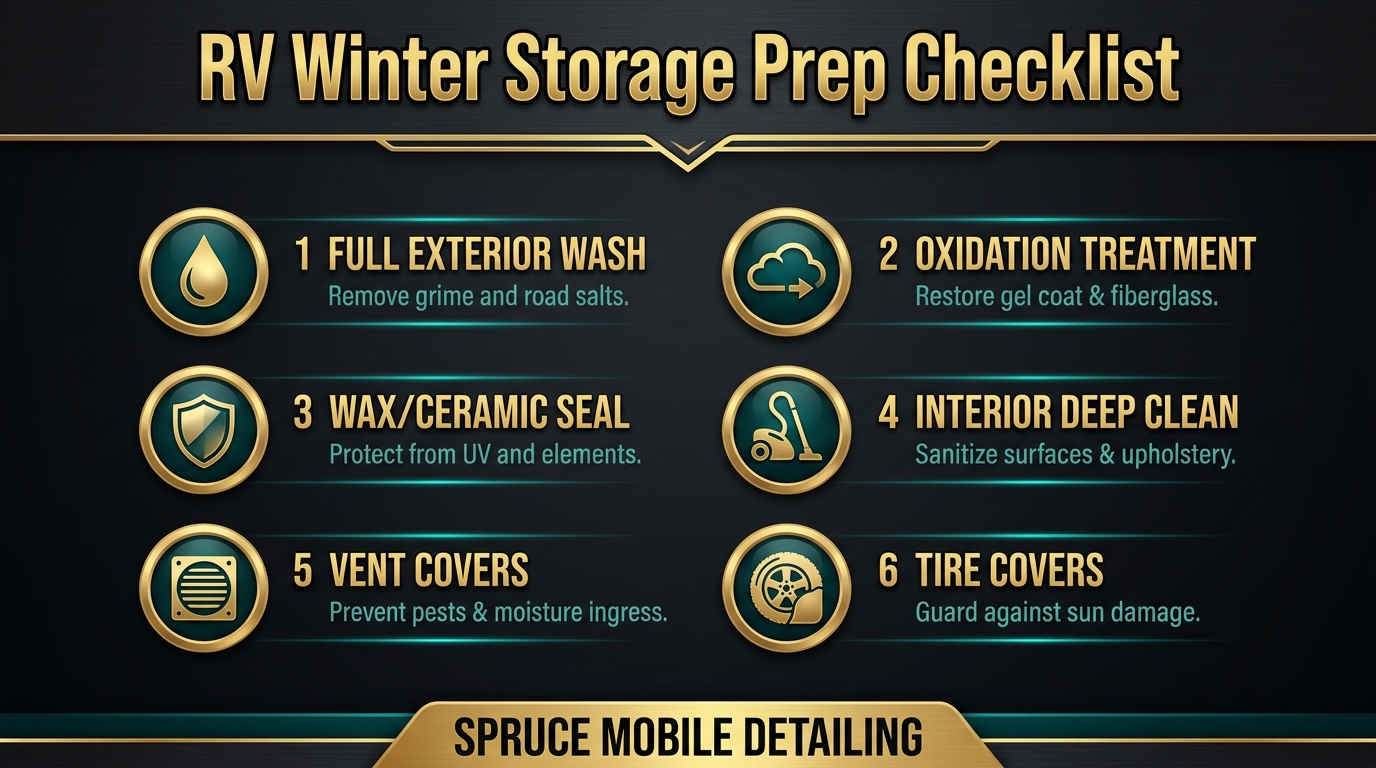
Here's the full detailing checklist we follow when prepping RVs for winter storage in Castle Rock and Elizabeth:
Exterior:
- Full hand wash — remove all road grime, salt, bugs, and sap
- Roof cleaning — clean and inspect seals, reseal any cracking sealant around vents and AC units
- Apply wax, sealant, or verify ceramic coating is intact — your rig needs UV protection even during storage
- Clean and treat all rubber seals around doors, windows, and slides — rubber dries out and cracks in Colorado's dry winter air. A UV protectant keeps seals flexible
- Clean wheel wells and undercarriage — road salt and mud hold moisture against metal and cause corrosion over winter
- Treat exterior metal (steps, handles, hitches) with a corrosion inhibitor
Interior:
- Remove ALL food — every item, including canned goods that can freeze and burst
- Deep clean the refrigerator and leave the door propped open
- Vacuum everything — including under cushions, inside cabinets, and in slide-out tracks
- Clean kitchen and bathroom surfaces with an antimicrobial cleaner
- Steam or extract upholstery and carpet — removes moisture, kills bacteria, eliminates odors that attract pests
- Leave interior cabinets and drawers slightly open for air circulation
- Place moisture absorbers (DampRid or silica packs) in closed spaces
Rodent Prevention (They Love RVs)
If you've stored an RV in Colorado, you've probably dealt with mice. Or you know someone who has. Mice and rats are attracted to the warmth, shelter, and leftover food that RVs provide, and they can cause thousands of dollars in damage over a single winter.
We've seen RV owners in Elizabeth open their rigs in spring to find chewed wiring harnesses, destroyed insulation, shredded upholstery, and droppings everywhere. One client had mice nest inside the dashboard of a Class C — the repair bill was over $3,000.
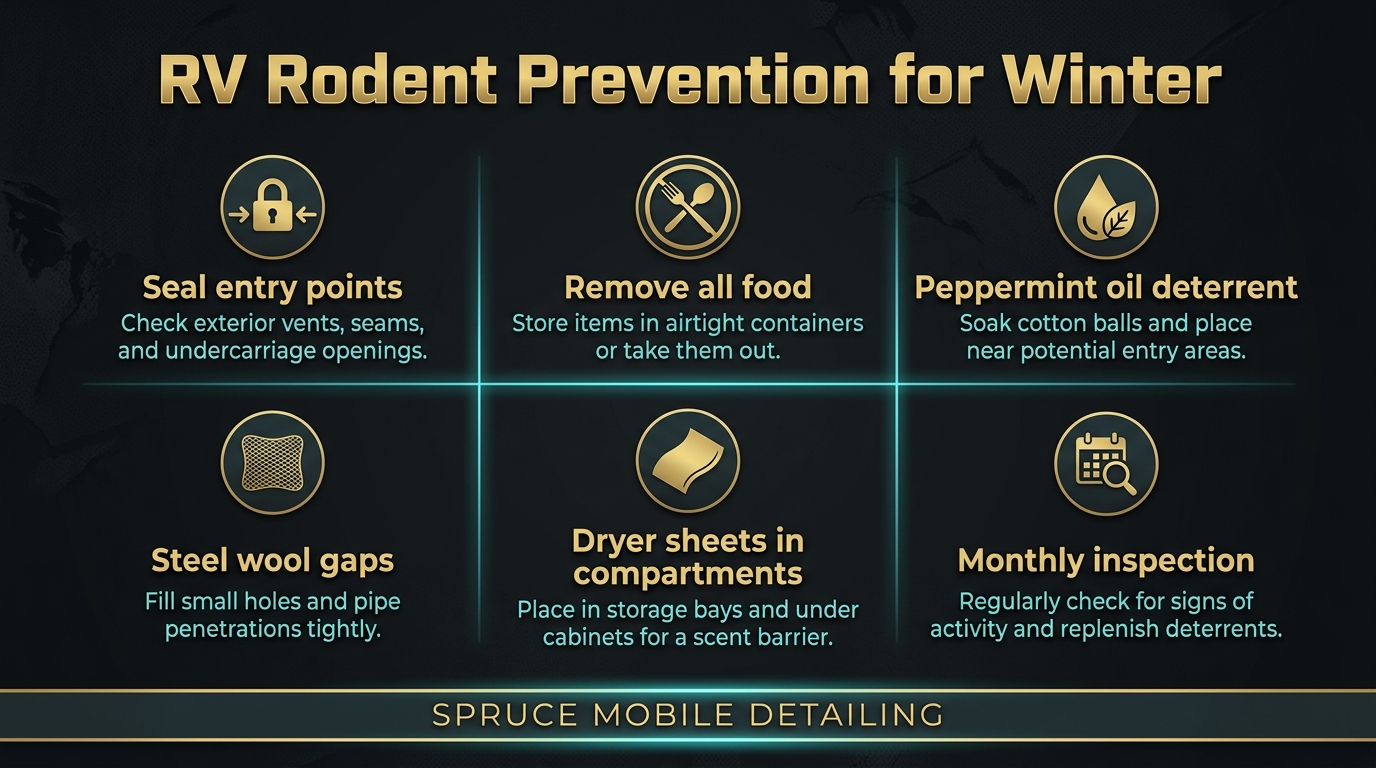
Here's what works for prevention:
- Remove all food — this is step one and it's non-negotiable. Mice can smell food through packaging. If it's edible, take it out
- Seal entry points — inspect the underside of your RV for gaps around plumbing, wiring, and slide mechanisms. Mice can fit through a hole the size of a dime. Use steel wool and expanding foam to seal gaps
- Place rodent deterrents — peppermint oil soaked cotton balls, Fresh Cab rodent repellent pouches, or electronic ultrasonic repellers. Refresh monthly if possible
- Set traps as backup — deterrents aren't foolproof. Snap traps along walls and near entry points catch the ones that get through
- Keep the underbelly dry — clean the undercarriage thoroughly before storage. Mud and organic debris attract nesting
The deep interior cleaning we do during storage prep serves double duty: it removes the food traces and organic matter that attract rodents in the first place.
Free Quote
Ready to prep your rig for storage?
We come to your home or office in Castle Rock and throughout Douglas County.
Cover Recommendations
Covering your RV during storage adds an extra layer of protection against UV, snow load, tree debris, and bird droppings. But a bad cover does more harm than good.
What to look for in a cover:
- Breathable fabric — non-breathable covers trap moisture against your finish and create a greenhouse for mold. Look for covers labeled as breathable or made from materials like Tyvek or polypropylene
- UV protection — the cover itself should resist UV degradation so it lasts more than one season
- Proper fit — too loose and it flaps in Colorado wind, scratching your finish. Too tight and it pulls on trim and mirrors. Measure your RV's exact length and use the manufacturer's sizing guide
- Reinforced corners and seams — Colorado wind is relentless. Cheap covers shred in the first storm
- Zippered access panels — so you can check on the rig mid-winter without removing the entire cover
If you can't cover:
- At minimum, use a windshield cover and tire covers. UV destroys tires and dries out windshield seals over winter
- Park facing south if possible — the north-facing side takes the most weather and UV abuse
- Ensure your wax or ceramic coating is fresh before storage — this is your finish's only protection without a cover
If your RV is stored at a facility in the Castle Rock or Elizabeth area, check if they offer covered or indoor storage options. The monthly premium for covered storage often costs less than one oxidation restoration job.
Spring De-Winterization Package
When camping season comes back around, your rig needs attention before the first trip. Everything we did to prep for storage now needs to be reversed and refreshed.
Our spring de-winterization detail includes:
- Full exterior wash and inspection — remove winter grime and check for any damage from snow, ice, or wind
- Wax or sealant refresh — even with a fresh application before storage, 5-6 months of Colorado winter degrades protection
- Roof inspection and cleaning — check for any sealant failures, debris damage, or mold that developed over winter
- Interior deep clean — vacuum, wipe down, and air out. Check for any signs of moisture damage or pest intrusion
- Rubber seal treatment — condition all door, window, and slide seals to restore flexibility after dry winter storage
- Glass cleaning inside and out
We schedule spring de-winterization details starting in late March and early April for Douglas County RV owners. Slots fill up fast as everyone wants to be ready for Memorial Day weekend — the unofficial start of Colorado camping season. If you want a specific date, book early.
Bundle your fall storage prep and spring de-winterization together and we'll work with you on pricing. Many of our RV clients do exactly this — two details a year that bookend the storage season, with washes in between during camping months.
FREQUENTLY ASKED QUESTIONS
When should I prep my RV for winter storage in Colorado?
October is ideal for most Douglas County RV owners. The last good camping weekends are typically in September, and you want to prep and store before the first hard freeze — usually mid to late October in Castle Rock and Elizabeth. Don't wait until November when temperatures can make cleaning difficult and water lines are at risk.
Should I leave my RV slides in or out during storage?
Slides in. Storing with slides extended puts unnecessary stress on the slide mechanisms, exposes more seal surface to weather, and creates more interior volume for temperature and moisture fluctuation. Close them, clean the slide seals, and treat the seals with a rubber conditioner before storing.
How do I prevent mold in my RV during winter storage?
Three things: clean everything thoroughly before storage so there's no organic material for mold to feed on, place moisture absorbers throughout the interior, and ensure some air circulation by cracking a roof vent slightly (with a vent cover to keep rain and snow out). If your RV has a built-in dehumidifier, leave it running if you have power at your storage location.