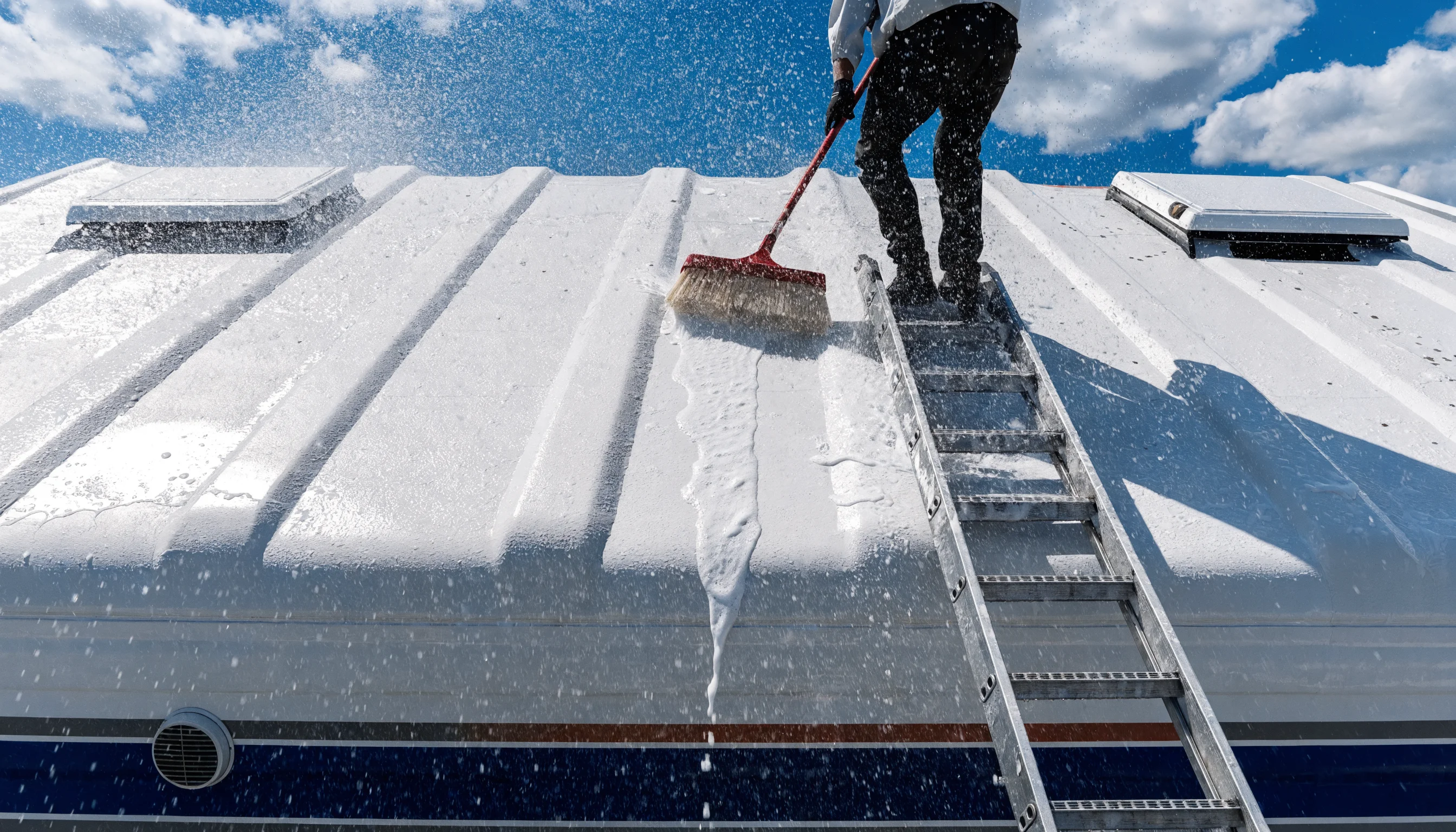
How to Identify Your RV Roof Type
Before you put anything on your RV roof, you need to know what it's made of. Using the wrong cleaner on the wrong material can cause permanent damage, void your warranty, or both. Here's how to tell what you're working with.
TPO (Thermoplastic Polyolefin)
- Bright white, smooth, slightly glossy surface
- Feels like a thick, flexible plastic sheet
- Seams are heat-welded (smooth, flat joints)
- Common on newer RVs manufactured after 2010
- Manufacturers: Dometic, Dicor, Alpha Systems
EPDM (Ethylene Propylene Diene Monomer)
- White or light gray with a slightly textured, matte finish
- Rubber feel — soft and flexible when pressed
- Seams are overlapped and sealed with adhesive or tape
- The most common RV roof material, especially on trailers and fifth wheels
- Manufacturers: Dicor, Alpha Systems, Carlisle
Fiberglass
- Hard, rigid surface — knock on it and it sounds solid, not hollow like rubber
- Often has a visible gel coat with slight texture
- Can develop oxidation and chalking just like RV sidewalls
- Common on Class A and Class C motorhomes, especially higher-end models
- Also found on molded-cap travel trailers and some fifth wheels
Aluminum (less common but worth mentioning)
- Metal surface — visible seams, sometimes with a ribbed pattern
- Found on vintage RVs and some Airstream-style trailers
- Treated differently than all three materials above
If you're still not sure, check your owner's manual or look for a sticker inside a storage compartment that lists the roof material. Your dealer can also confirm it. Getting this right matters — it determines everything that follows.
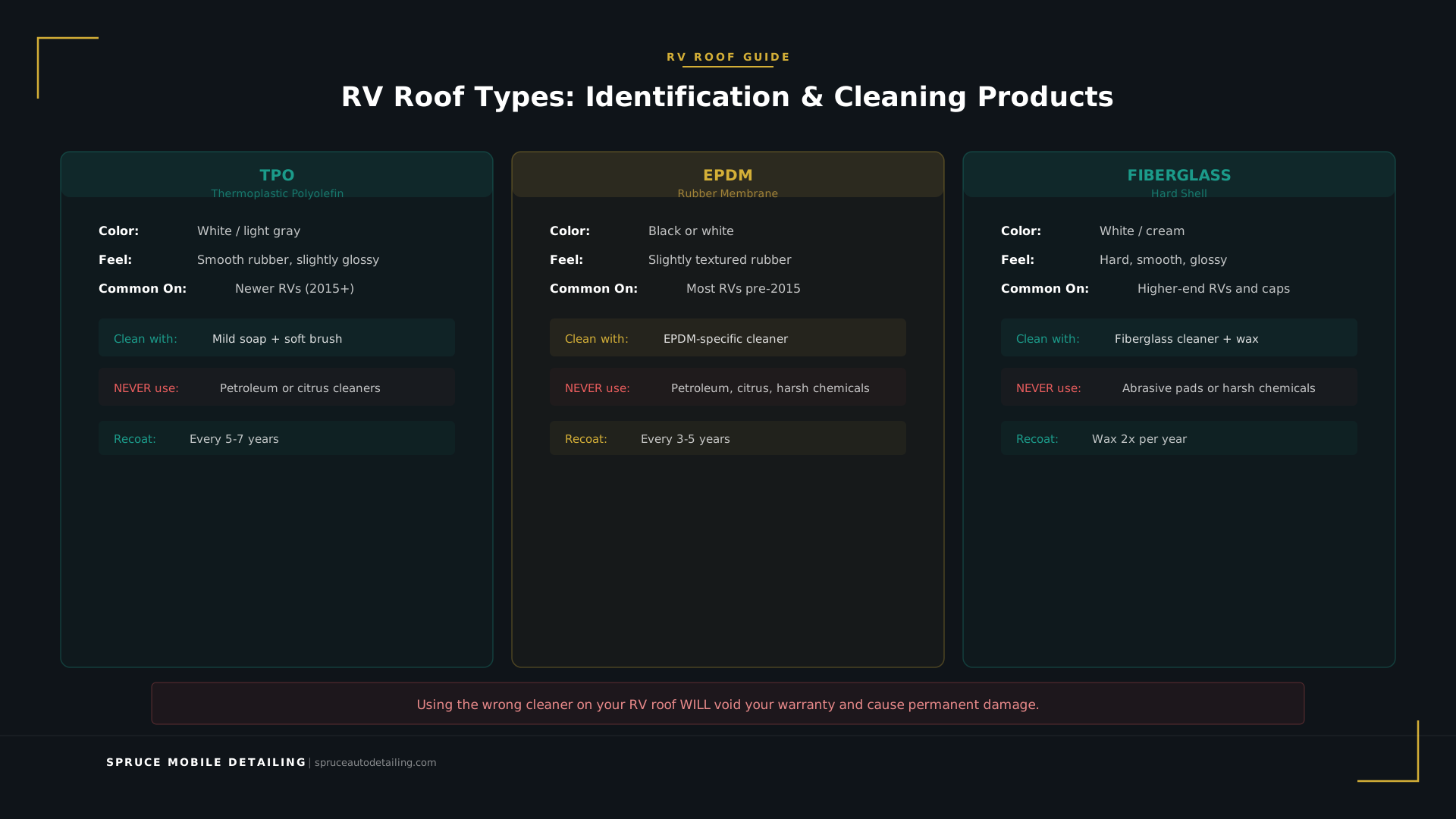
Cleaning TPO Roofs (Do's and Don'ts)
TPO is the newest and most durable of the common RV roof materials. It resists UV better than EPDM and doesn't oxidize like fiberglass. But it still needs regular cleaning and has its own set of rules.
DO:
- Use a mild, non-abrasive cleaner — dish soap diluted in water works fine for routine cleaning. Purpose-made TPO cleaners are ideal for tougher jobs
- Use a soft-bristle brush or microfiber mop — TPO can handle more scrubbing pressure than EPDM but there's no reason to be aggressive
- Clean every 3-4 months — or more often if you're parked under trees. In Colorado, pine sap and cottonwood debris are the biggest offenders
- Rinse thoroughly — residual cleaner left on TPO attracts more dirt
- Inspect seams while you're up there — TPO seams are heat-welded but can separate at edges over time, especially in Colorado's temperature extremes
DON'T:
- Use petroleum-based solvents — mineral spirits, gasoline, or harsh degreasers can break down TPO
- Use abrasive pads or steel wool — they scratch the surface and create spots where dirt and mold gain a foothold
- Apply rubber-roof conditioners — products made for EPDM can leave residue on TPO and cause discoloration
- Pressure wash at close range — keep the nozzle at least 12 inches away and use a wide fan pattern. High pressure can lift seams
- Use citrus-based cleaners — the acidity can degrade TPO over time with repeated use
Cleaning EPDM Roofs (Do's and Don'ts)
EPDM is the most common RV roof material, and it's also the most sensitive to improper cleaning. This rubber membrane protects your rig from weather, but it requires specific products and a gentle approach.
DO:
- Use EPDM-specific cleaners — Dicor and Camco both make EPDM-safe roof cleaners. These are pH-balanced to clean without damaging the rubber
- Apply EPDM conditioner/protectant after cleaning — products like Dicor's rubber roof protectant restore UV resistance and keep the material flexible. This is especially critical in Colorado where UV at altitude degrades rubber faster
- Use a medium-bristle brush — firm enough to remove mold and debris, soft enough not to abrade the membrane
- Clean at least every 3 months — quarterly at minimum. If your RV is stored under trees in Elizabeth or Franktown, monthly during summer
- Check and reseal lap sealant — while you're cleaning, inspect around vents, skylights, and antennas for cracking sealant. Dicor self-leveling sealant is the standard
DON'T:
- Use petroleum-based products — this is the most important rule. Petroleum products (oil, gas, WD-40, many tire shines) dissolve EPDM. One spill can cause permanent damage
- Use citrus cleaners or degreasers — the solvents in these products attack EPDM rubber
- Pressure wash — EPDM is a membrane, not a hard surface. Pressure can lift edges, penetrate seams, and force water under the material where it causes rot
- Use bleach — it dries out the rubber, causing cracking and premature failure
- Walk on the roof when it's wet — EPDM gets extremely slippery when wet. This is a safety issue, not a maintenance issue
A common mistake: using household cleaners like Simple Green, which contains chemicals that can degrade EPDM with repeated use. Stick to products specifically labeled as EPDM-safe.
Cleaning Fiberglass Roofs (Do's and Don'ts)
Fiberglass roofs are the most durable and the most similar to cleaning your RV's sidewalls. They're hard, rigid, and covered in gel coat — which means they can oxidize just like the rest of the body.
DO:
- Wash with RV-specific soap or automotive car wash soap — avoid anything with strong alkaline or acidic properties
- Use a soft-bristle brush or wash mitt — fiberglass gel coat scratches more easily than you'd think
- Wax or seal the roof — just like the sidewalls, a fiberglass roof benefits from UV protection. Apply wax or sealant after each cleaning, or at least twice a year
- Address oxidation early — if you notice the roof turning chalky, compound and polish before it gets worse. At Colorado's altitude, fiberglass roofs oxidize faster than anywhere else in the country
- Inspect for cracks and chips — temperature cycling in Colorado (freezing nights to 80-degree days) causes expansion and contraction that can crack gel coat over time
DON'T:
- Use abrasive cleaners on a regular basis — save compounding for when oxidation is visible. Regular cleaning should be non-abrasive
- Let tree sap sit — sap etches into gel coat if left in the sun. Remove it promptly with a sap-specific remover or rubbing alcohol
- Ignore the roof during your detail routine — out of sight, out of mind is how fiberglass roofs end up with Stage 3 oxidation. If you're waxing the sides, wax the roof too
- Assume it's maintenance-free — fiberglass is tougher than rubber, but it still degrades in UV. In Colorado, unprotected fiberglass can start showing oxidation in as little as 18 months
Free Quote
Rather leave the roof to a professional?
We come to your home or office in Castle Rock and throughout Douglas County.
Safety Warnings
This section matters more than any cleaning advice in this article. RV roof cleaning is one of the most dangerous maintenance tasks you can do, and it sends people to the emergency room every year.
Before you get on any RV roof:
- Check your owner's manual for weight limits — not all RV roofs are designed to support a person's weight. Many travel trailer roofs will flex, crack, or even collapse under foot traffic. If your manual says don't walk on it, don't walk on it
- Use a proper RV ladder rated for your weight plus equipment — household step ladders are not adequate for RV roof access
- Never work alone — have someone on the ground who can call for help if you fall
- Never work on a wet roof — EPDM and TPO are dangerously slippery when wet. Clean in sections: wet a section, scrub it from the ladder, rinse, and move on
- Wear non-slip shoes — sneakers with worn tread are not sufficient
- Watch for overhead power lines — if your RV is parked near power lines, a long-handled brush or spray wand can reach them
- Stay aware of the edge — there are no railings on an RV roof. It's easy to step back while scrubbing and walk right off the edge
- Don't work in heat — Colorado summer afternoons above 90 degrees plus the heat radiating off a dark or white roof can cause heat exhaustion quickly. Clean early morning or late afternoon
If any of this sounds risky for your situation — your roof is high, your balance isn't great, you don't have a spotter, or your roof can't support weight — that's a perfectly valid reason to hire a professional.
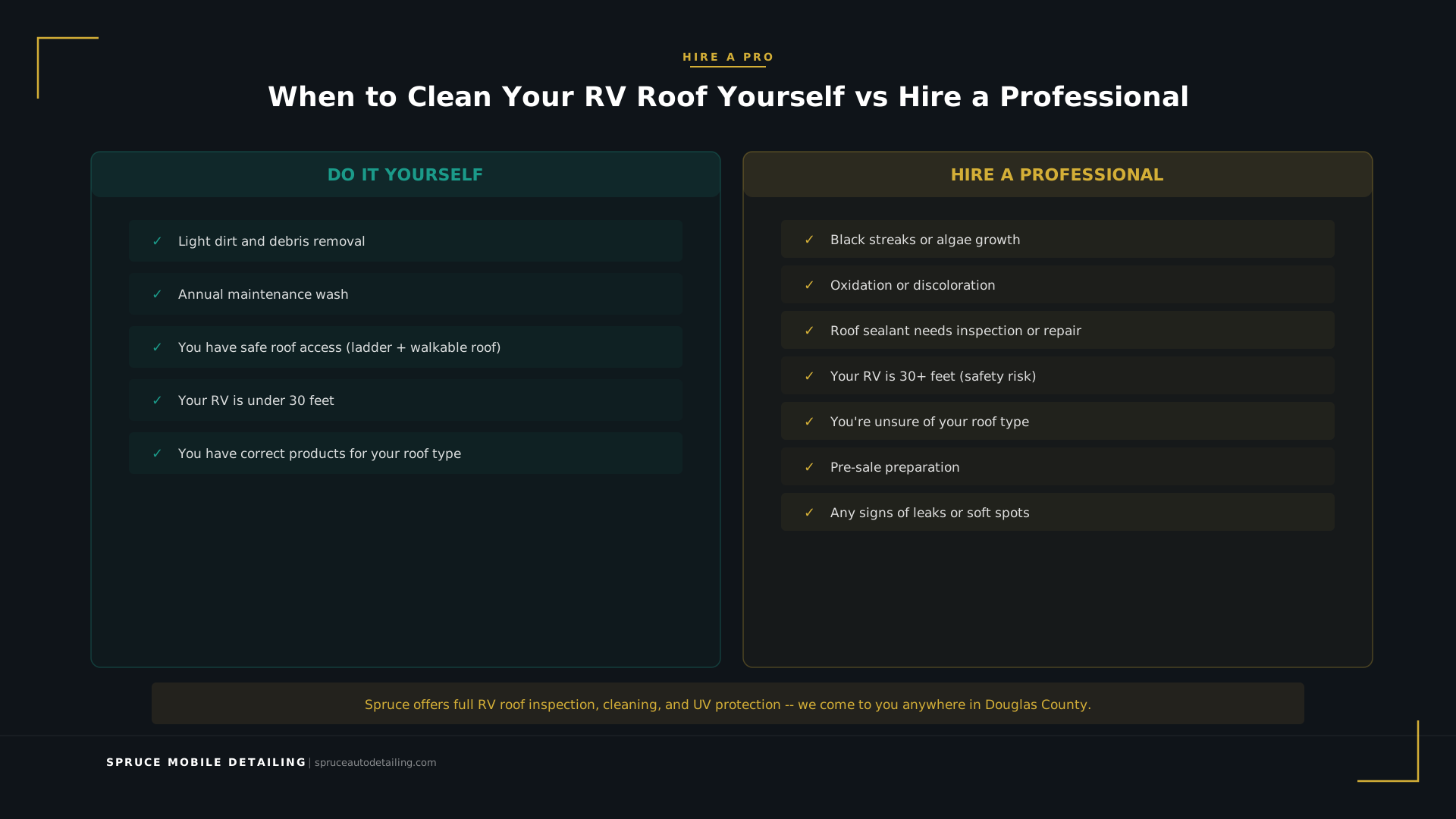
When to Hire a Professional
There's no weakness in knowing when a job calls for professional help. Here's when professional RV detailing makes more sense than DIY roof cleaning:
- Your roof is over 10 feet high — most Class A and Class C motorhomes put you 11-13 feet off the ground. That's a potentially life-changing fall
- Your roof can't support body weight — if your manual says no foot traffic, you need someone with the right equipment to clean from the sides or from a lift
- The roof has heavy mold or mildew buildup — black mold on EPDM requires specific treatment products and proper safety precautions
- The fiberglass roof is badly oxidized — machine polishing an RV roof at height isn't a DIY-friendly task
- You need the roof sealed after cleaning — resealing EPDM and TPO roof penetrations (vents, AC units, antennas) requires proper sealant and technique
- You're in your RV storage lot — many lots have restrictions on what work you can do on-site. We bring our own water, equipment, and waste containment
We service RVs throughout Castle Rock, Elizabeth, and the rest of Douglas County. We'll clean your roof safely, using the right products for your specific roof material, and let you know if there are any issues that need attention — cracking sealant, lifted edges, or early-stage damage that's better caught now than after a rainstorm.
FREQUENTLY ASKED QUESTIONS
How often should I clean my RV roof?
At minimum, every 3-4 months. If your RV is stored under trees or in an area with heavy pollen, mold, or bird traffic, clean monthly during spring and summer. In Colorado, altitude UV breaks down protective treatments faster, so more frequent cleaning and resealing keeps your roof in better shape long-term.
Can I use a pressure washer on my RV roof?
On fiberglass, yes — with caution. Use a wide fan tip, keep the nozzle 12+ inches away, and avoid seams and edges. On TPO, low pressure only and avoid seam areas. On EPDM, never use a pressure washer. The force can lift the membrane, penetrate seams, and cause water damage underneath.
What causes black streaks on RV sidewalls?
Black streaks form when rainwater runs off the roof carrying dissolved dirt, mold, pollutants, and rubber or sealant residue down the sidewalls. The streaks bond to the gel coat or paint over time. Regular roof cleaning reduces the source material. Ceramic coating or wax on the sidewalls prevents the streaks from bonding.
Can I use Dawn dish soap on my RV roof?
On TPO and fiberglass, diluted Dawn is acceptable for routine cleaning. On EPDM, it's not recommended for regular use. Dawn strips oils from the rubber, which can accelerate drying and cracking over time. Use an EPDM-specific cleaner followed by a rubber conditioner instead.