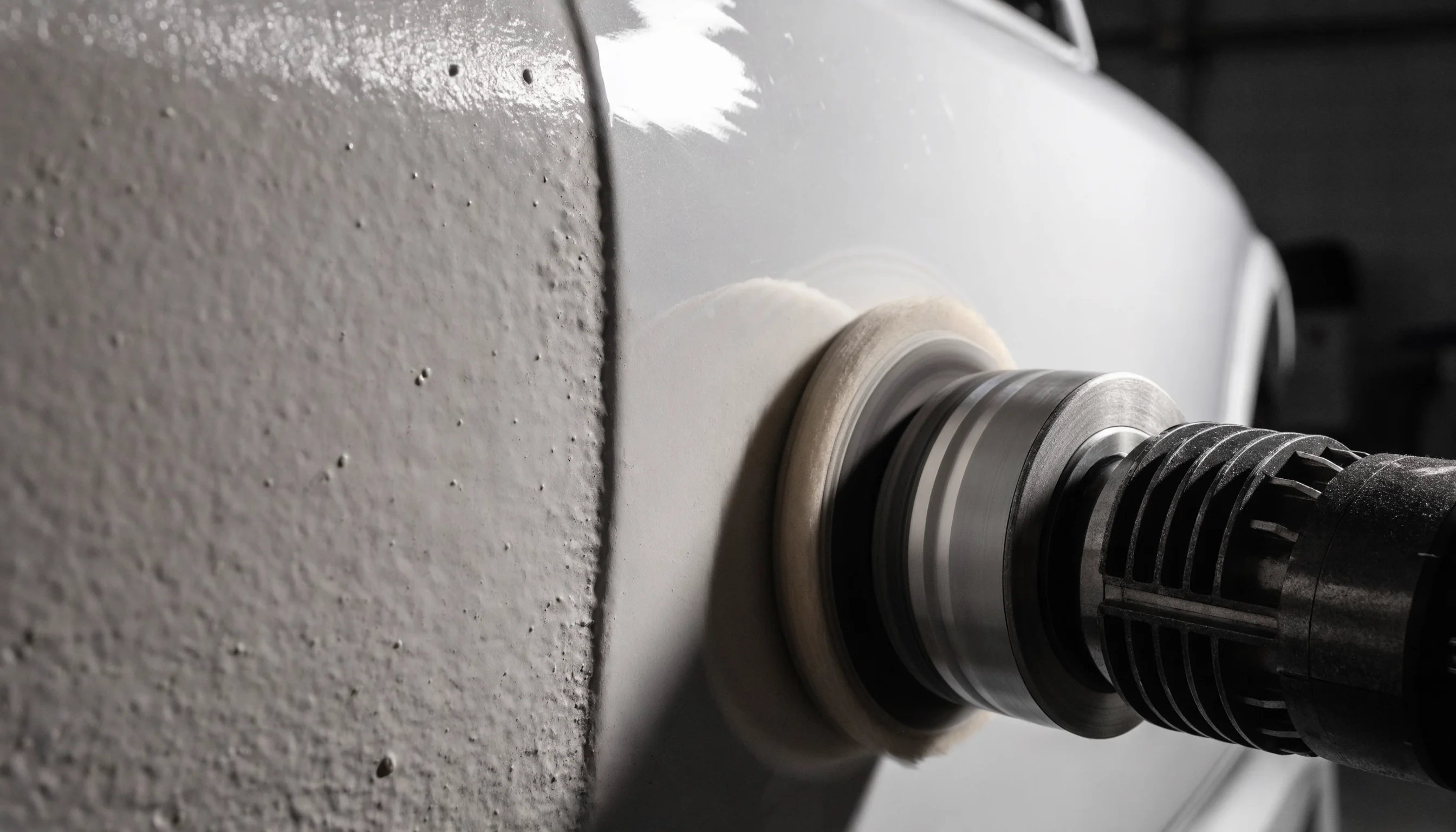
Why Colorado RVs Oxidize Faster
If you've ever noticed that RVs in Colorado seem to fade faster than rigs parked in the Midwest or along the coast, you're not imagining it. There's a direct, measurable reason: altitude increases UV exposure.
At 6,000 feet — roughly where Castle Rock sits — UV radiation is 25-30% more intense than at sea level. For every 1,000 feet of elevation gain, UV intensity increases by approximately 4-5%. That extra energy hits your RV's gel coat and paint every single day, and it's the primary driver of oxidation.
Here's what makes Colorado especially tough on RVs:
- Intense UV at altitude — gel coat and fiberglass absorb more UV energy per hour than they would in Texas or Florida
- Over 300 days of sunshine per year — less cloud cover means less natural UV filtering
- Low humidity — dry air means no moisture barrier softening UV impact on surfaces
- Temperature swings — Castle Rock regularly sees 40-degree temperature swings in a single day, expanding and contracting gel coat and creating micro-cracks where UV penetrates deeper
- Outdoor storage — many RV owners in Elizabeth and the rural parts of Douglas County store their rigs outside without covers
The combination of these factors means an RV stored uncovered in Castle Rock will oxidize noticeably in 2-3 years. The same RV stored in a covered facility in Portland might go 5-7 years before showing the same level of damage.
Stages of Oxidation (Mild to Severe)
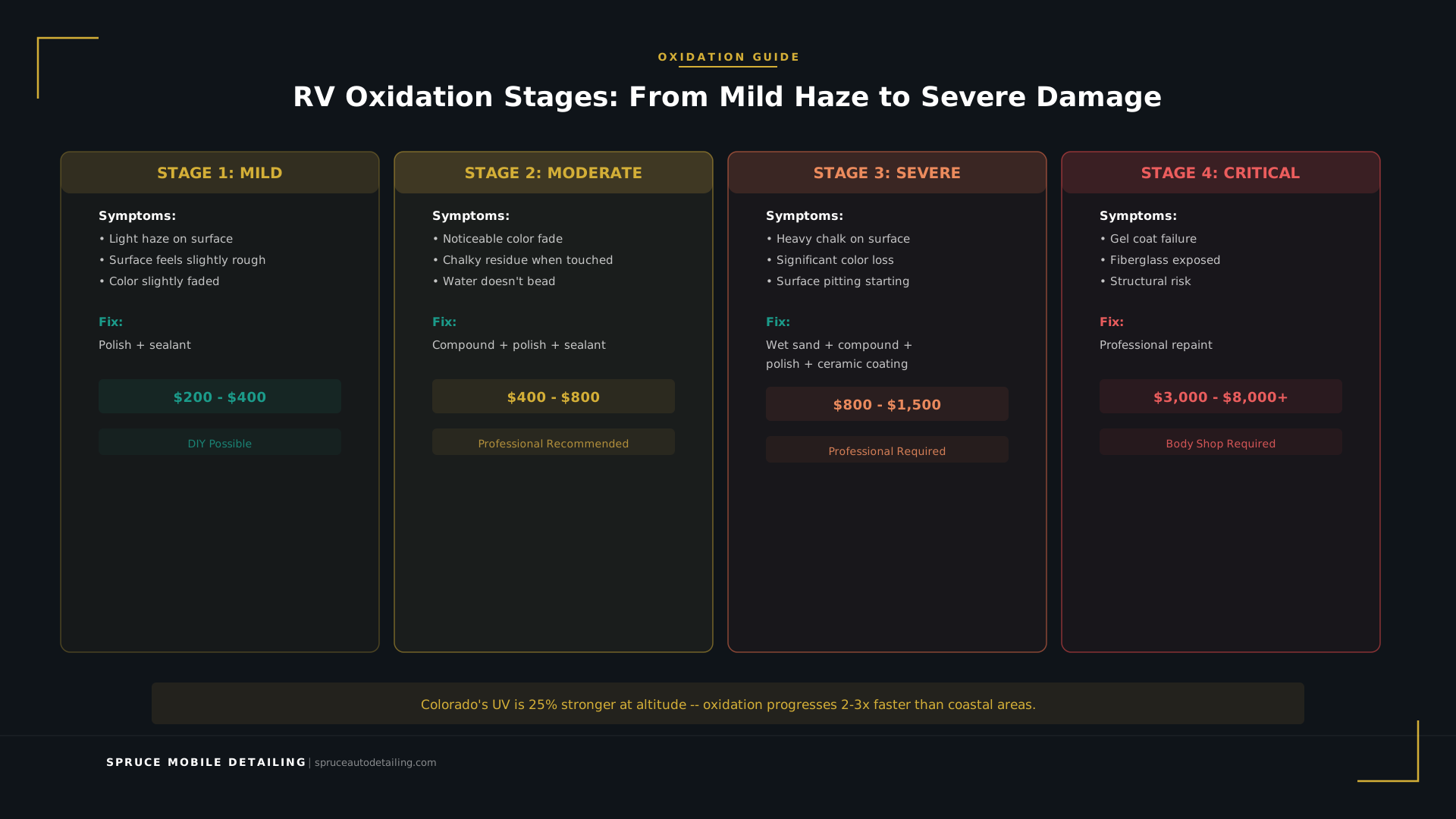
Oxidation doesn't happen overnight. It's a progressive breakdown of the gel coat's surface layer, and catching it early makes restoration dramatically easier and cheaper. Here's what each stage looks like:
Stage 1: Light Oxidation (Surface Haze)
- The finish looks slightly dull compared to when it was new
- Colors appear muted, especially whites and light grays
- Water no longer beads on the surface — it sheets or sits flat
- You might notice it only in direct sunlight or when comparing to a freshly waxed vehicle
Stage 2: Moderate Oxidation (Chalky Feel)
- Run your finger across the surface and you'll pick up a white, chalky residue
- The color is clearly faded — reds turn pink, blues turn gray-blue, whites turn yellowish
- Black streaks from the roof are more visible because the gel coat can't repel water anymore
- Wax doesn't last more than a couple of weeks before the dullness returns
Stage 3: Heavy Oxidation (Structural Damage)
- The surface is rough to the touch, almost porous
- The gel coat may be flaking or peeling in spots
- Colors are severely faded and no amount of wax brings them back
- In extreme cases, the fiberglass underneath is exposed — this is beyond cosmetic damage and becomes a structural concern
Stages 1 and 2 are fully correctable with professional compounding and polishing. Stage 3 may require gel coat repair or repainting, which is a significantly larger investment. The takeaway: don't wait until it's chalky.
The Restoration Process (Compound, Polish, Protect)
Restoring an oxidized RV is a multi-step process that removes the damaged surface layer and reveals fresh gel coat underneath. Here's how we approach it for our RV detailing clients in Douglas County:
Step 1: Thorough Wash and Decontamination
Before any correction work begins, the entire RV needs to be spotlessly clean. We do a full hand wash, followed by a clay bar or chemical decontamination to remove bonded contaminants like rail dust, tree sap residue, and mineral deposits. Any contamination left on the surface during compounding gets ground in rather than removed.
Step 2: Compounding (Cutting)
This is the heavy lifting. We use a rotary or dual-action polisher with a cutting compound designed for gel coat. The compound contains abrasive particles that remove the oxidized top layer, revealing fresh material underneath. For moderate oxidation, this step alone can be transformative — we've seen rigs go from chalky white to deep, glossy color in a single pass.
Step 3: Polishing (Refining)
Compounding leaves behind haze marks and micro-scratches from the abrasive. A finer polish smooths the surface to a high gloss. This step is what gives you that wet, reflective finish.
Step 4: Protection (Sealing)
The fresh gel coat needs protection immediately. Without it, UV starts breaking down the surface again from day one. We apply either a high-grade polymer sealant (lasts 3-6 months) or a professional ceramic coating (lasts 2-5 years) depending on the owner's goals and budget.
The entire process takes 1-3 days depending on the RV's size and the severity of oxidation. A 30-foot Class C with moderate oxidation typically takes a full day for exterior correction alone.
Free Quote
Wondering how bad your oxidation really is?
We come to your home or office in Castle Rock and throughout Douglas County.
DIY vs Professional Oxidation Removal
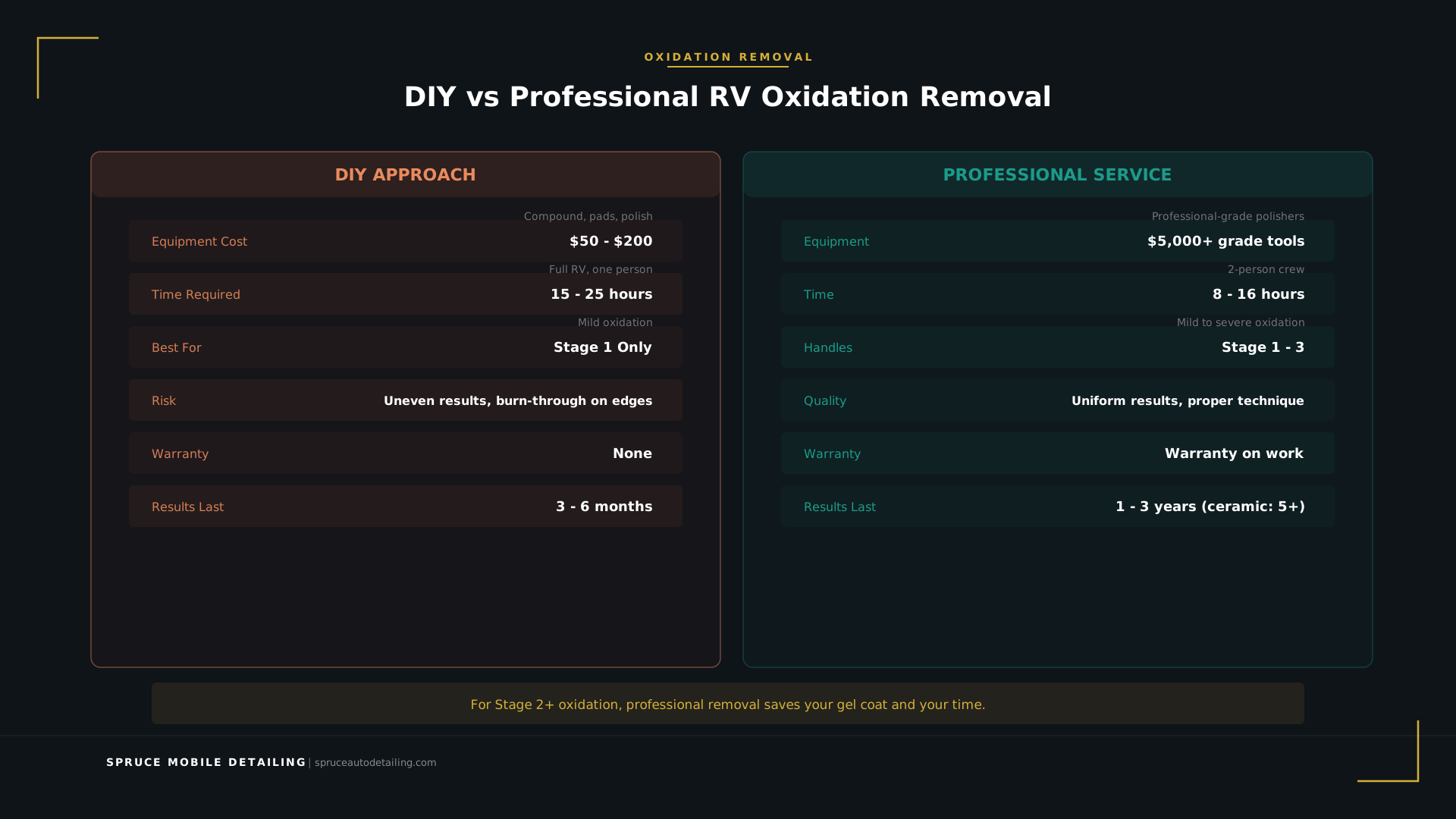
We'll be straight with you: light oxidation on a small travel trailer is something a motivated DIYer can handle. Moderate to heavy oxidation on a 35-foot motorhome is a different story entirely.
DIY can work if:
- The oxidation is light (Stage 1) and limited to easily reachable areas
- You own or can rent a quality dual-action polisher — hand polishing a full RV isn't realistic
- Your rig is under 25 feet and you have a full day or weekend to dedicate
- You're comfortable on a ladder and can safely access the roof and upper sides
Professional restoration is the better call when:
- Oxidation is moderate to heavy (Stage 2-3)
- Your RV is over 30 feet — the sheer surface area makes DIY exhausting and inconsistent
- You need to correct the entire exterior including roof, sides, front cap, and rear
- You want the correction to last — a professional applies even pressure and the right products for your specific gel coat or paint type
- Safety is a factor — working at height on an RV roof or upper sidewalls carries real risk
The biggest mistake we see with DIY oxidation removal is inconsistency. Someone does a great job on the driver's side at chest height, but the upper panels and roof get rushed or skipped entirely. Six months later, you have a two-tone RV — glossy on the bottom, chalky on top.
If you go the DIY route, invest in a good dual-action polisher (not a rotary unless you have experience), RV-specific compound, and a quality sealant. And work in the shade — compounding in direct Colorado sun causes the compound to dry out and creates more problems than it solves.
How Ceramic Coating Prevents Future Damage
Once your gel coat is restored, the goal shifts to keeping it that way. This is where ceramic coating earns its investment for Colorado RV owners.
A professional ceramic coating creates a hard, transparent layer over your gel coat that does three critical things:
- Blocks UV radiation — the coating absorbs and reflects UV before it reaches the gel coat, dramatically slowing oxidation
- Repels water and contaminants — the hydrophobic surface prevents water spots, bird droppings, and tree sap from bonding to the finish
- Resists chemical damage — road salt, de-icers, and bug acids sit on the coating surface instead of attacking your gel coat
We use System X and Glidecoat coatings for RVs. Both are formulated specifically for gel coat and fiberglass — not just repurposed car coatings. The result is a coating that flexes with the gel coat through temperature swings rather than cracking and peeling.
For an RV stored outside in Castle Rock or Elizabeth, ceramic coating can extend the time between correction jobs from every 1-2 years to every 4-5 years. Over the life of the RV, that saves thousands in repeated compounding and polishing — and keeps the gel coat thicker and healthier long-term.
The ideal timeline: restore the gel coat, let it cure for 24 hours, then apply the ceramic coating. This locks in the fresh finish at its absolute best and gives the coating the cleanest possible surface to bond with.
FREQUENTLY ASKED QUESTIONS
Can oxidation be removed from any RV?
Stages 1 and 2 (dull finish and chalky residue) can be fully corrected on virtually any RV through professional compounding and polishing. Stage 3 (flaking or peeling gel coat) may require gel coat repair or repainting, which goes beyond standard detailing. We'll assess your rig and let you know what's realistic before we start.
How much does RV oxidation removal cost in Colorado?
It depends on the size of your RV and the severity of oxidation. Light oxidation on a 25-foot trailer might start around $15-20 per foot. Heavy oxidation requiring multi-step correction on a 40-foot Class A will be significantly more. We provide exact quotes after seeing your rig because every situation is different.
Will oxidation come back after restoration?
Yes, eventually. Oxidation is an ongoing process driven by UV exposure. Without protection, a restored finish in Colorado can start showing oxidation again within 12-18 months. With a quality sealant, you'll get 3-6 months of protection. With ceramic coating, you can go 2-5 years before the gel coat needs attention again.
Is oxidation removal the same as polishing?
Not exactly. Polishing refines the surface to a high gloss, but it uses a fine abrasive that can't cut through moderate or heavy oxidation. Oxidation removal starts with compounding (a more aggressive cut) to remove the damaged layer, then finishes with polishing to bring up the gloss. Think of compounding as the fix and polishing as the finish.