
The Short Answer (4x/Year for Most People)
If you want one number, it is four. Four full details per year, roughly once per season, is the right frequency for most vehicles in Castle Rock and Douglas County.
That might sound like a lot compared to what you read online, where national advice usually says two to three times per year. But those recommendations are written for average climates. Colorado is not average. At 6,000+ feet, UV radiation is 25 to 30% more intense than at sea level. Winter brings months of mag chloride and road grime. Dry air cracks leather and fades interiors faster. And the red dirt out here stains everything.
Four times per year is not overkill. It is what it takes to actually maintain your vehicle's paint and interior in this climate.
Between full details, a maintenance wash every 2 to 4 weeks keeps surface contaminants from building up. A wash is not a detail. It is a quick exterior clean to remove dust, pollen, and road film before they can do real damage.
Factors That Change the Frequency
Four times a year is the baseline, but several factors might push you to more or fewer details.
Where you park matters most. If your car sits outside all day in a parking lot, it is getting hammered by UV, bird droppings, tree sap, and dust. Outdoor parkers in Castle Rock and Parker need to detail more frequently than someone who garages their car every night. If you have a garage, you might get away with three full details a year.
Your commute makes a difference. Driving I-25 daily means more road spray, more gravel chips, and more exposure to winter road treatments than someone who works from home. Long commuters should consider monthly maintenance washes between full details.
Vehicle color plays a role. Dark colors (black, dark grey, navy) show swirl marks, water spots, and dust far more than lighter colors. If you drive a black car and park outside, you will want more frequent attention to keep it looking sharp.
Vehicle age and condition. A brand new car with fresh paint needs protection from day one. An older vehicle with faded or damaged paint needs correction first, then a protective schedule. Either way, regular detailing preserves value.
Pets and kids. If your back seat regularly carries dogs, car seats, snacks, and soccer gear, the interior needs attention more often. A full interior detail every 3 months minimum is smart, with spot cleaning in between.
Dirt road drivers. If you live off a gravel or dirt road (common in Elizabeth, Larkspur, and Franktown), your car accumulates dust and grit faster than paved-road drivers. Monthly washes and quarterly details are the minimum.
Colorado's Seasonal Detailing Calendar
Here is the schedule we recommend for most Castle Rock, Parker, and Douglas County drivers. Adjust based on the factors above.
Spring Detail (March/April): This is the most important detail of the year. Winter is brutal on cars in Colorado, and this is when you undo the damage. Get a full interior and exterior detail with hot water extraction to pull out embedded mag chloride and salt. Polish the paint to remove any marring from winter. Apply a fresh sealant or check on your ceramic coating's condition. Condition all leather surfaces.
Summer Detail (June/July): UV is at its peak. This detail focuses on paint protection and interior UV defense. Reapply sealant if you are not ceramic coated. Apply UV protectant to the dashboard and trim. Deep clean interior surfaces that have been getting baked by the sun. This is also a good time for a ceramic coating booster if you have one.
Fall Detail (September/October): Prep for winter. Get a thorough detail before the first snow and road treatment. Apply a strong sealant or wax layer for extra winter protection. Treat fabric seats and carpets with a protectant to create a barrier against incoming salt and moisture. Condition leather before the dry air gets worse.
Winter Detail (December/January): Mid-winter maintenance. Focus on interior extraction to remove salt and grime buildup before it gets worse. Quick exterior wash and decontamination to remove accumulated road treatment chemicals. This does not need to be as intensive as the spring detail, but skipping it means all that salt sits in your carpet for months longer.
Free Quote
Need a Detailing Schedule That Works?
We come to your home or office in Castle Rock and throughout Douglas County.
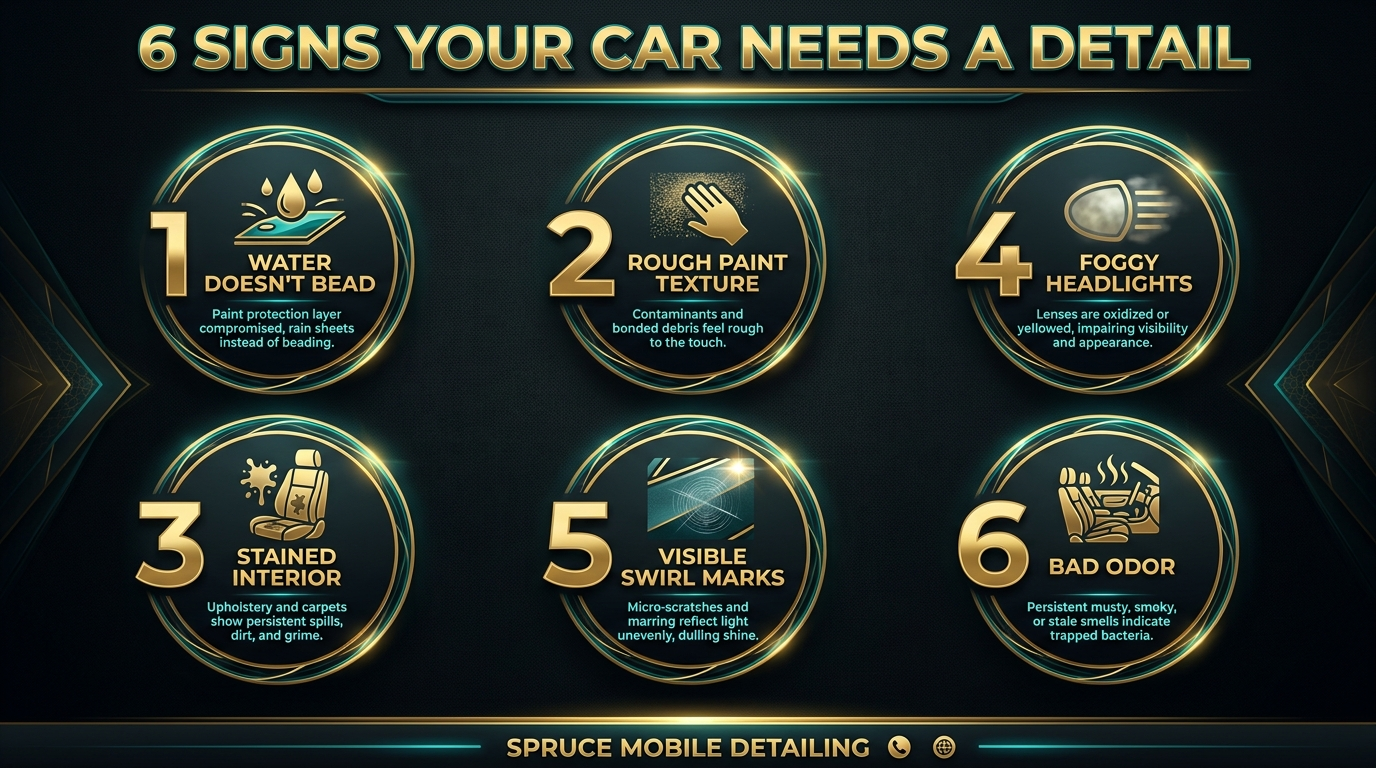
Signs Your Car Needs a Detail Now
Sometimes the calendar does not matter because your car is telling you it needs attention right now. Here are the signs to watch for.
Your paint feels rough to the touch. Run your hand across a clean, dry panel. If it feels gritty or rough instead of smooth, contaminants have bonded to your clear coat. A clay bar treatment is needed before they cause permanent damage.
Water no longer beads on the paint. If rain or hose water sheets flat across your paint instead of beading up, your wax, sealant, or coating protection has worn off. Your paint is exposed.
White residue on floor mats or carpets. Mag chloride residue. It is crystallized and working its way deeper into the fibers. The longer you wait, the harder it is to extract.
Interior smells off. A musty or stale smell usually means moisture and bacteria in the carpet or under the seats. This is common after Colorado's winter with snow-covered boots and wet gear.
Dashboard or leather looks faded or dry. UV damage and dry air are winning. Faded dashboard plastic and dry, cracking leather are signs that protection has been depleted and damage is starting.
Bug splatter or bird droppings have been there for more than 48 hours. Both are acidic and will etch unprotected paint if left too long. In summer heat, the damage can happen even faster.
How Ceramic Coating Changes the Schedule
If your vehicle has a professional ceramic coating, the detailing schedule shifts. You still need regular maintenance, but the intensity changes.
What stays the same: You still need regular washes (every 2 to 4 weeks) to remove surface contaminants. You still need interior details for carpet extraction, leather conditioning, and general cleanliness. The interior does not care what is on the exterior paint.
What changes: You no longer need to reapply wax or sealant. The ceramic coating handles that protection for 2 to 9 years. Your exterior detail shifts from "decontaminate, polish, protect" to "wash, inspect, boost." A ceramic coating maintenance wash is faster and simpler than a full exterior detail.
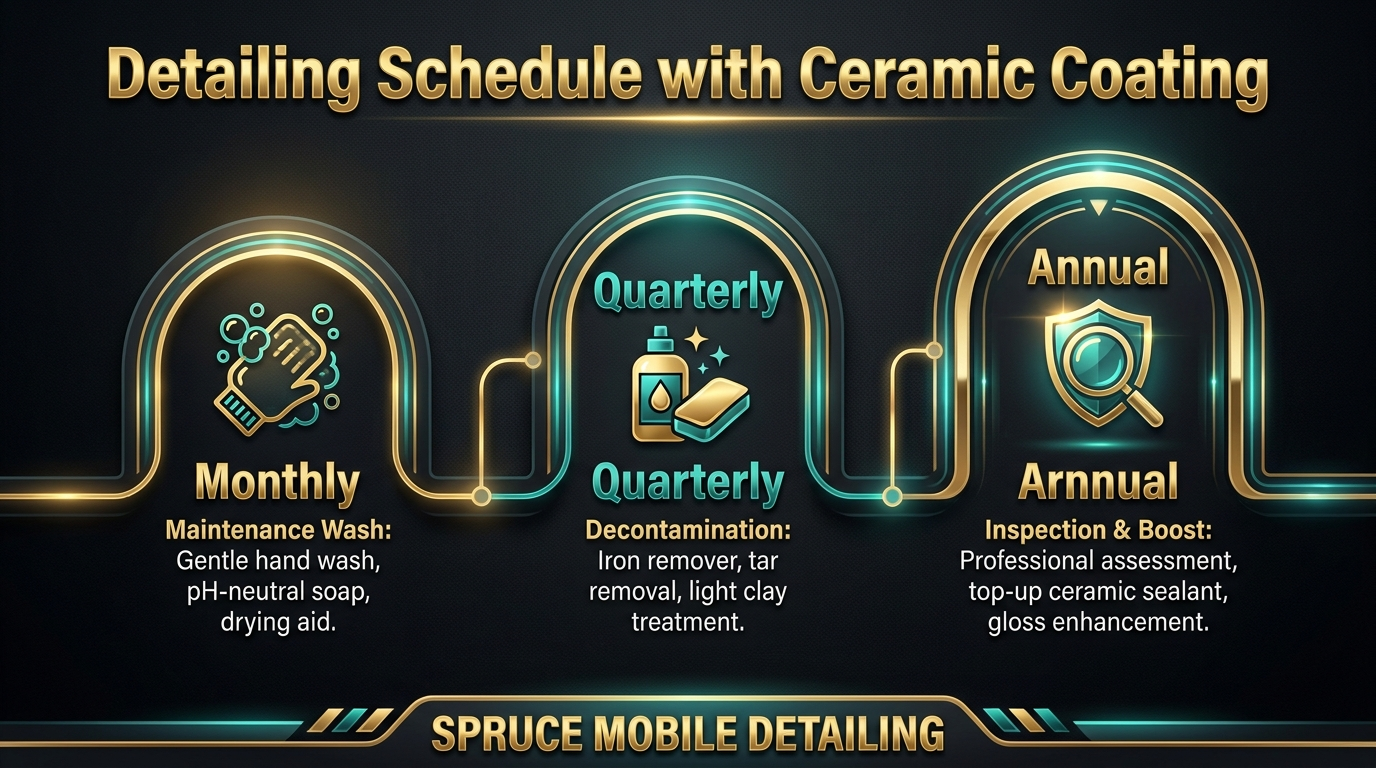
Recommended schedule with ceramic coating:
- Every 2 to 4 weeks: Maintenance wash (hand wash with pH-neutral soap)
- Every 3 to 4 months: Interior detail with extraction and leather conditioning
- Every 6 months: Ceramic coating booster spray application
- Annually: Professional coating inspection and maintenance detail
Ceramic coating does not eliminate the need for detailing. It reduces the frequency and intensity of exterior work while making every wash easier and faster. For most of our ceramic-coated customers in Castle Rock, the biggest savings are time and effort rather than total cost.
Need help setting up a detailing schedule that works for your vehicle and driving habits? Contact us for a free consultation or call (720) 971-2020.
FREQUENTLY ASKED QUESTIONS
Is detailing 4 times a year too much?
Not in Colorado. National recommendations of 2 to 3 times per year assume milder climates. Colorado's intense UV at altitude, winter mag chloride, dry air, and red dirt all accelerate paint and interior degradation. Four times per year, once per season, is what it takes to stay ahead of the damage.
Can I just wash my car instead of getting it detailed?
Washing and detailing serve different purposes. A wash removes surface dirt and contaminants. A detail decontaminates, corrects, and protects the paint, plus deep cleans the interior. You should wash every 2 to 4 weeks and detail every 3 to 4 months. Washing alone will not remove bonded contaminants, restore paint clarity, or condition leather.
How often should I detail my car if it has ceramic coating?
With ceramic coating, your exterior maintenance shifts to regular hand washes every 2 to 4 weeks and a coating booster every 6 months. Interior details should still happen every 3 to 4 months since the interior is not affected by the exterior coating. Annual professional coating inspections help maximize the coating's lifespan.