Where the Mud Actually Goes (Hint: Everywhere)
If you have ever taken your truck out to Rampart Range, Devil's Head, or any of the Forest Service roads around Castle Rock and Elizabeth during mud season, you know the drill. You come back coated. Hood, fenders, rocker panels, wheel wells, undercarriage — all of it is caked in Colorado's famous red clay and trail mud.
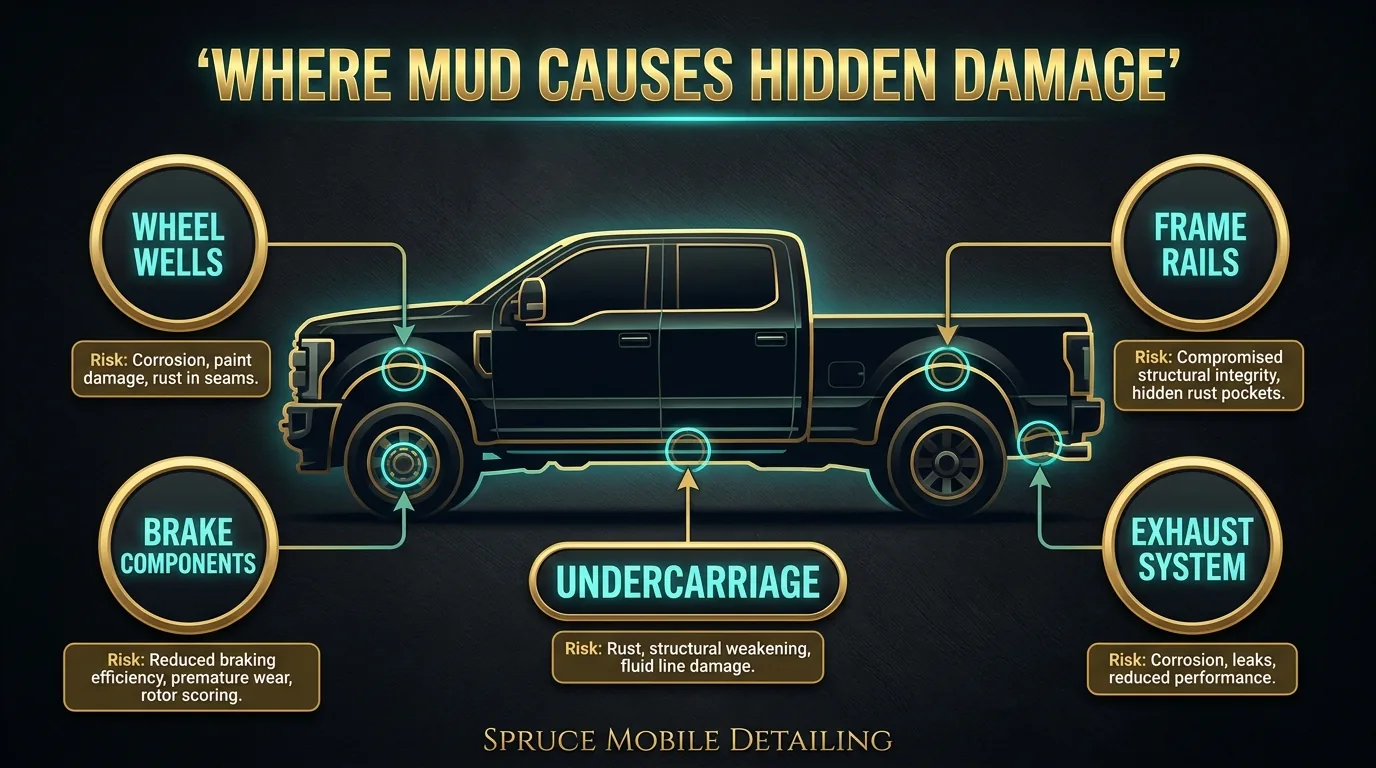
But here is what most people do not realize: the mud you can see is only part of the problem. Colorado trail mud works its way into places you would never think to look. Behind fender liners. Inside body panel seams. Into the channels around your tailgate. Packed into every crevice of your wheel wells. Coating your brake components and suspension joints.
And Colorado mud is not just dirt and water. Depending on where you were, it can contain clay minerals that stain paint, organic matter that traps moisture, and fine grit that acts like sandpaper against moving parts. The longer it sits, the worse the damage potential becomes.
Undercarriage: The Rust Risk Nobody Talks About
The undercarriage is where mud does its real damage, and it is the area most truck owners neglect after a trail run. Here is why it matters so much.
Mud holds moisture against metal. When that mud is packed into your frame rails, around your exhaust, and on your transfer case, it creates a constant damp environment. In Colorado, we have the added bonus of wide temperature swings — warm enough during the day for moisture to activate corrosion, cold enough at night for freeze-thaw cycles that crack and expand any existing weak spots.
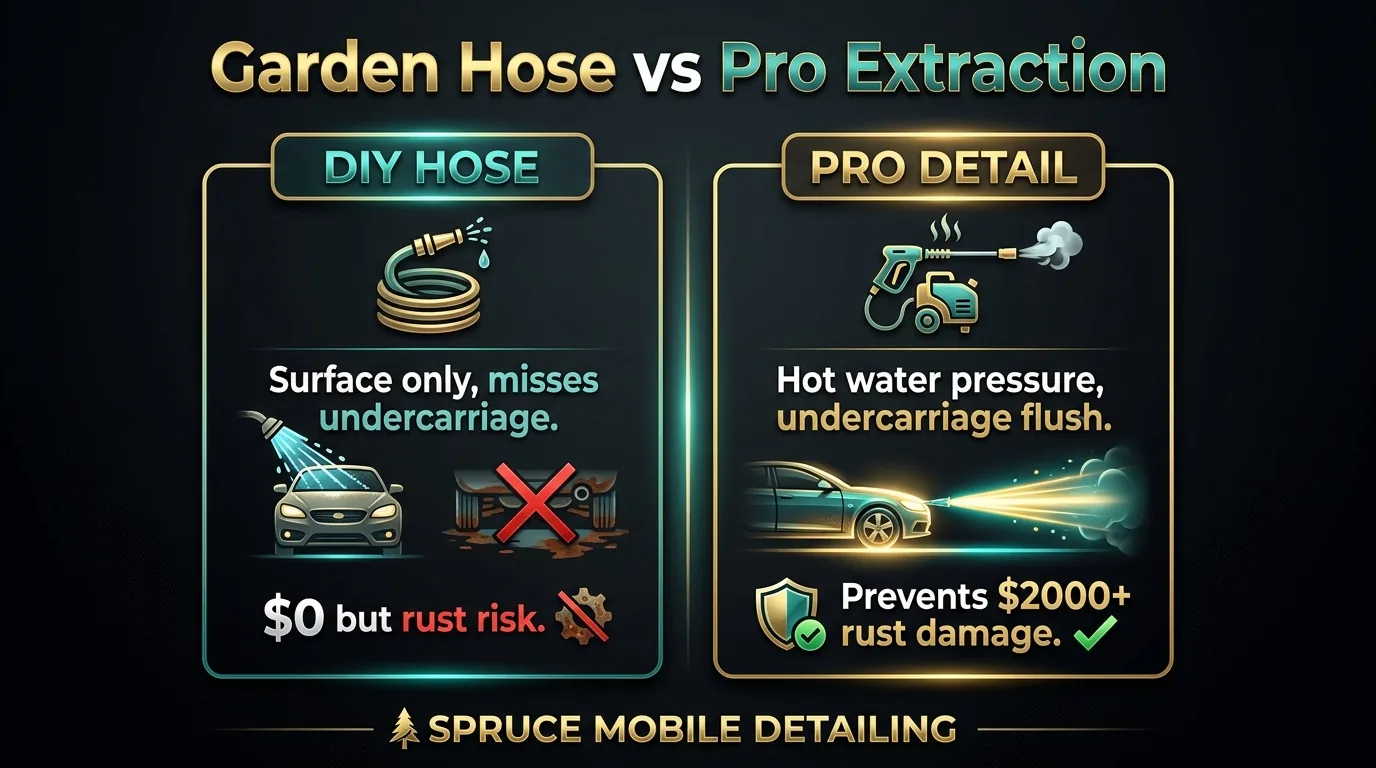
A quick drive through an automatic car wash does almost nothing for a mud-packed undercarriage. The spray is too weak and too brief to dislodge compacted trail mud. It might rinse the loose stuff off the body panels, but the packed clay underneath stays right where it is.
We see trucks come in for their first professional detail after a season of trail use, and the undercarriage looks like it has been neglected for years. Mud caked an inch thick around frame crossmembers. Suspension components completely encased. Brake lines hidden under layers of dried clay. All of it trapping moisture and accelerating corrosion.
A proper post-trail undercarriage cleaning uses high-pressure water and targeted spray patterns to break up and flush out compacted mud. It is the single most important thing you can do for your truck's longevity after off-road use.
Post-Trail Detailing Checklist
After a day on the trails around Castle Rock, Rampart Range, or the forest roads near Elizabeth, here is what a thorough post-trail detail should include:
- Pre-rinse to remove loose mud from all surfaces before touching the paint (touching mud-covered paint with a wash mitt is a guaranteed scratch fest)
- High-pressure undercarriage flush to remove packed mud from frame, suspension, and drivetrain components
- Wheel well cleaning including behind fender liners where mud accumulates
- Wheel and tire cleaning to remove mud from wheel faces, lug nuts, and tire treads
- Full exterior hand wash using the two-bucket method to avoid scratching
- Tailgate and hinge cleaning — mud loves to hide in the tailgate channel
- Door jamb and drip rail cleaning where mud splashes during trail driving
- Interior vacuum and mat cleaning because mud tracks inside no matter how careful you are
- Paint decontamination if clay minerals have bonded to the clear coat
This is the level of cleaning your truck needs after serious trail use. A drive-through wash covers maybe three of these steps. Our truck detailing service covers all of them. Our truck detailing service covers all of them.
Free Quote
Just Got Back from the Trails?
We come to your home or office in Castle Rock and throughout Douglas County.
How Often to Clean During Mud Season
Colorado's mud season typically runs from late March through June, when snowmelt and spring rain turn trails into a mess. If you are hitting the trails regularly during this period, the frequency of cleaning matters.
Our recommendation for active off-road truck owners:
- After every trail day: At minimum, do a thorough rinse of the undercarriage and wheel wells within 24 to 48 hours. Do not let mud sit for days.
- Every 2 to 3 trail trips: A more thorough wash including pre-rinse, hand wash, and wheel cleaning.
- Once per month during mud season: A full professional detail with undercarriage cleaning, decontamination, and paint protection reapplication.
- End of mud season: A comprehensive detail including paint correction if needed, full undercarriage inspection and cleaning, and fresh sealant or ceramic coating maintenance.
This schedule keeps your truck protected without going overboard. The key is not letting mud sit. The longer it stays on your truck, the more damage it does.
DIY Rinse vs Professional Extraction
We are not going to tell you that every post-trail rinse needs to be a professional detail. That is neither practical nor necessary. If you have a pressure washer at home, a good post-trail rinse of the undercarriage and body panels is a solid first line of defense.
But here is where DIY falls short: compacted mud in frame rails and behind fender liners requires targeted spray at specific angles. Most home pressure washers lack the reach and the PSI to flush these areas effectively. You end up rinsing the easy-to-reach surfaces and leaving the problem areas untouched.
Professional extraction also addresses what happens after the mud is removed. If trail mud has been sitting on your paint for days, clay minerals may have bonded to the clear coat. These bonded contaminants feel rough to the touch and cannot be removed by washing alone. A clay bar treatment or chemical decontamination is needed to restore the surface.
Our recommendation: handle quick rinses yourself after every trail run, and schedule a professional detail monthly during mud season to address the deeper cleaning that DIY cannot reach. For truck owners in Castle Rock and Elizabeth who spend their weekends on the trails, this approach gives you the best protection without breaking the bank.
FREQUENTLY ASKED QUESTIONS
How soon should I wash my truck after off-roading?
Within 24 to 48 hours at minimum, especially the undercarriage. The longer mud sits on your truck, the more moisture it holds against metal surfaces. Colorado mud also contains clay minerals that can bond to your paint and become extremely difficult to remove if left for more than a few days.
Is a regular car wash enough after a trail run?
No. An automatic car wash will rinse loose dirt from the body but does almost nothing for compacted mud in the undercarriage, wheel wells, and behind fender liners. These are the areas where real damage happens. You need targeted high-pressure cleaning to flush packed mud from frame rails and suspension components.
Can trail mud damage my truck's paint?
Yes. Colorado trail mud often contains clay minerals and fine grit. If mud dries on your paint and you try to wipe or wash it off without a thorough pre-rinse, the grit acts like sandpaper and scratches the clear coat. Clay minerals can also bond to the paint surface and require clay bar treatment to remove.
Do you detail trucks at Rampart Range or trailheads?
We provide mobile detailing at your home, not at trailheads. The best approach is to do a quick rinse after your trail run and then schedule a professional detail at your home in Castle Rock, Elizabeth, or anywhere in Douglas County within a day or two.