What DEF Does to Paint (Chemistry 101)
If you own a diesel truck built after 2010, you are dealing with DEF — Diesel Exhaust Fluid. Every Ram Cummins, Ford Power Stroke, and Chevy Duramax uses it. And if you have ever spilled it while filling the tank, you know it leaves a nasty white residue.
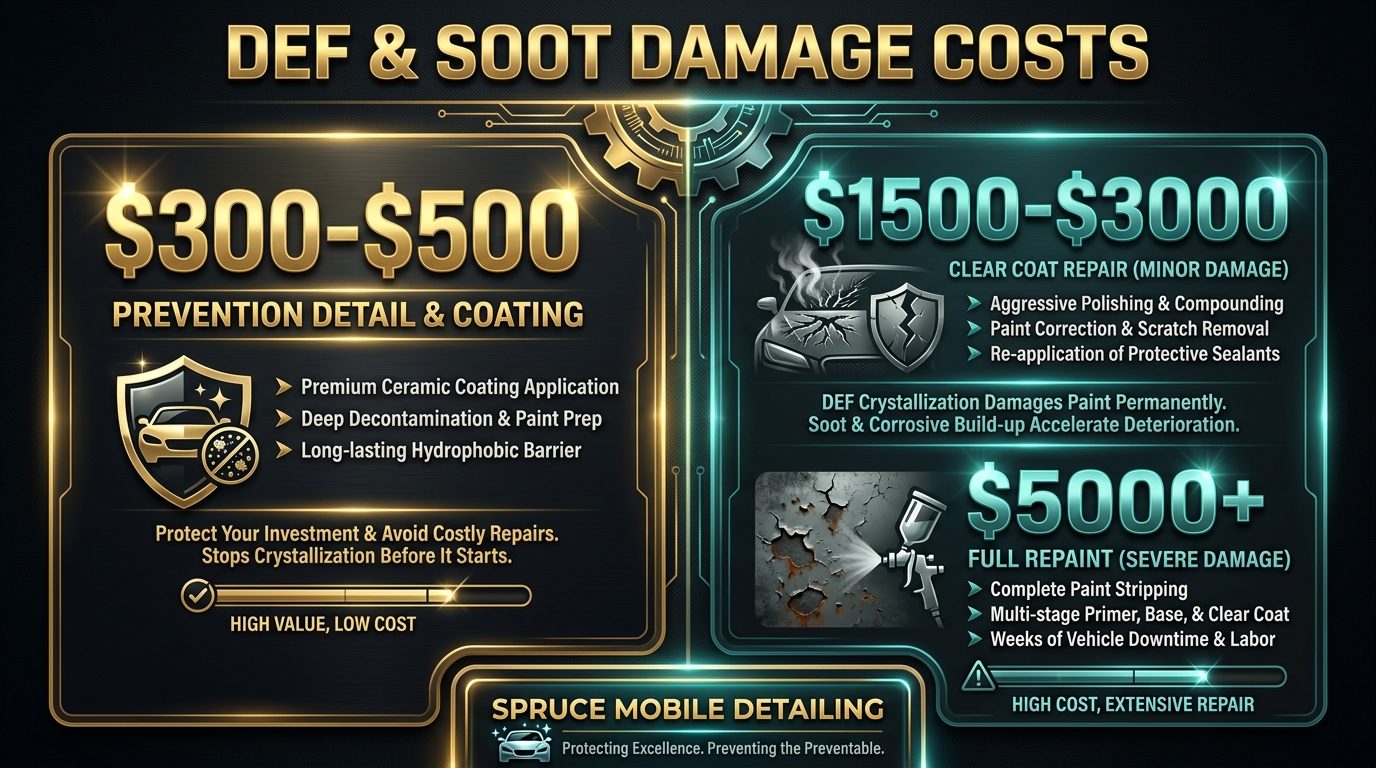
Here is what is actually happening. DEF is a solution of 32.5% urea and 67.5% deionized water. When it spills on paint and dries, the water evaporates and the urea crystallizes. Those white crystals are mildly alkaline, and they bond to the clear coat surface. If left long enough, the alkaline residue can etch into the clear coat, causing permanent damage that looks like water spots but will not buff out.
The DEF fill port on most diesel trucks is right next to the fuel filler, usually on the driver's side bed panel. Spills and drips run down the body panel and across the rear bumper. Over time, this creates a pattern of staining that is immediately recognizable on any diesel truck. We see it constantly on trucks in Castle Rock and Elizabeth — especially on dark-colored trucks where the white crystallization is most visible.
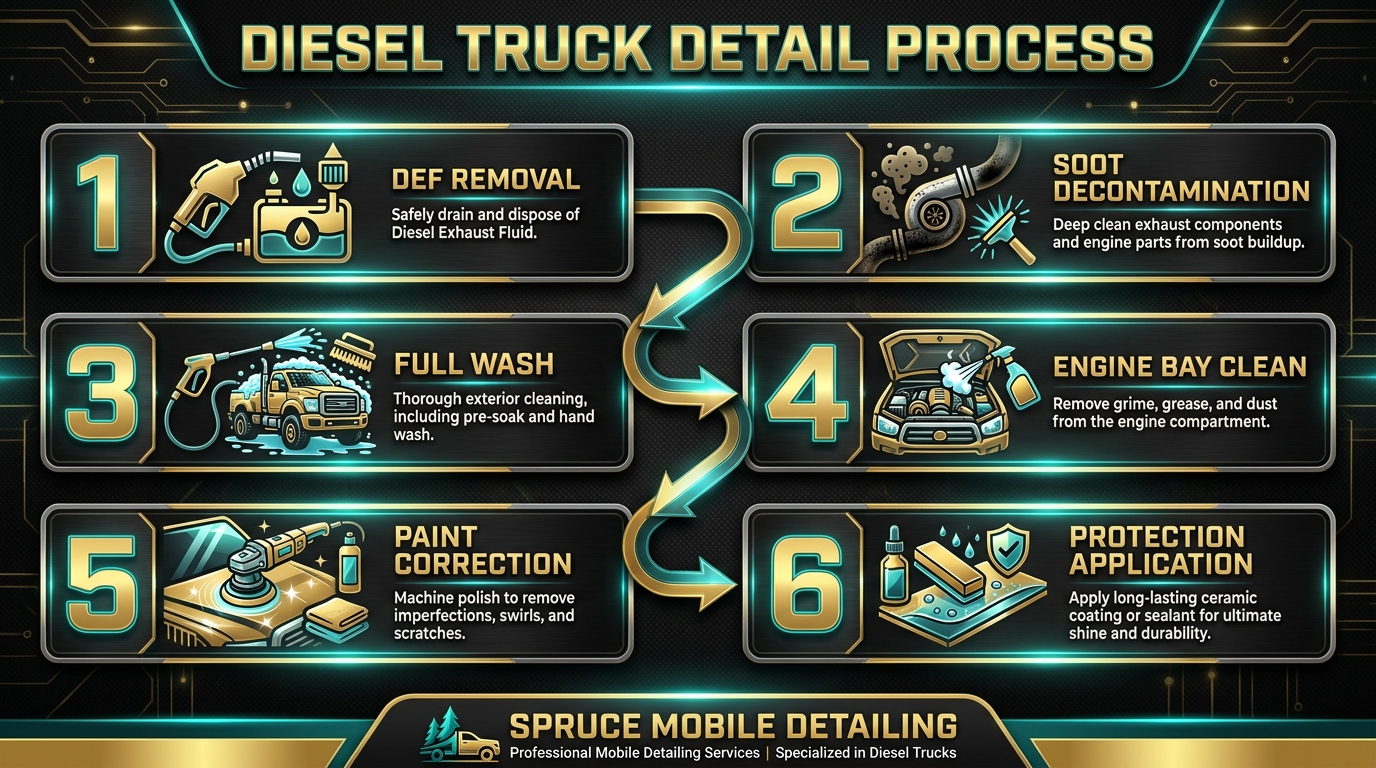
Removing DEF Crystallization Properly
The good news: DEF stains are removable if caught early enough. The bad news: most people use the wrong approach and make it worse.
Here is what NOT to do: do not try to scrub dry DEF crystals off your paint. The crystals are abrasive, and rubbing them across the clear coat will create scratches. Do not use acidic wheel cleaners or household vinegar as a first step, because the chemical reaction can create new staining patterns.
The correct approach is to dissolve the crystals first, then remove them gently:
- Soak the affected area with warm water for several minutes. DEF is water-soluble, so the crystals will begin dissolving on their own.
- Use a pH-neutral car wash soap and a soft wash mitt to gently lift the dissolved residue. Multiple passes may be needed for heavy buildup.
- For stubborn crystallization that has been baked on by sun exposure, we use a dedicated alkaline stain remover designed for urea deposits. This dissolves the crystals without damaging the clear coat.
- Clay bar treatment after washing to remove any bonded residue that washing alone did not address.
- Polish if necessary to remove light etching that the DEF caused before it was cleaned.
- Seal or coat the area to provide a barrier against future spills.
The key is treating DEF spills promptly. A fresh spill cleaned within a day or two usually comes off with just a wash. A spill that has been baking in Colorado sun for weeks may require polishing to fully correct.
Exhaust Soot and How It Sticks
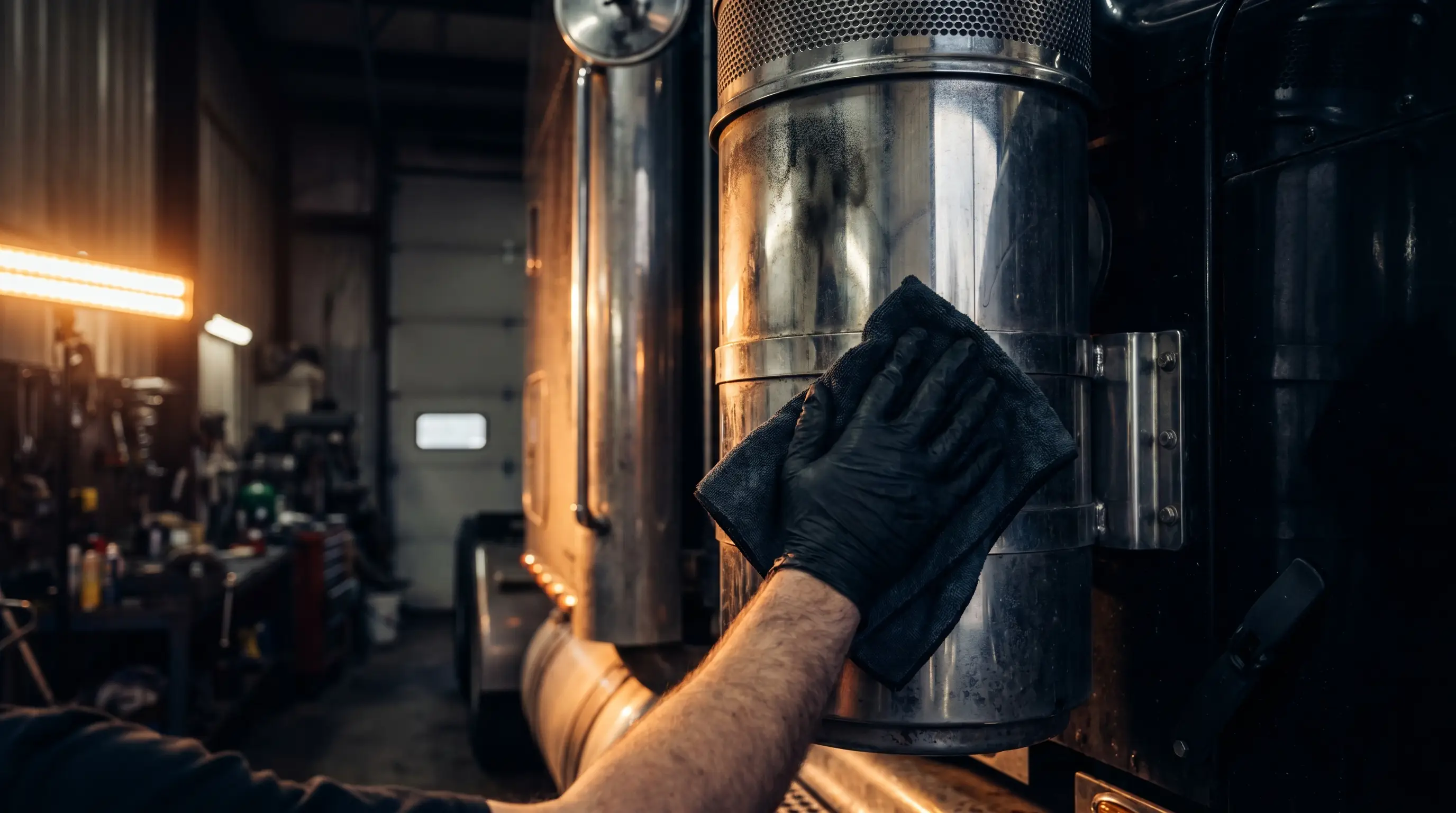
Diesel exhaust soot is carbon-based particulate matter. Even with modern DPF (Diesel Particulate Filter) systems, some soot escapes and deposits on the rear of the truck. Tailgate, rear bumper, exhaust tips, and the lower rear quarter panels are the most affected areas.
Soot is particularly stubborn because it is oily. The carbon particles carry trace hydrocarbons from the combustion process, which act as a binder that makes the soot cling to surfaces. A regular car wash will remove some of the surface soot, but the oily film remains and attracts new deposits even faster.
On white and light-colored trucks, soot staining is obvious — dark streaks running down from the exhaust tips. On dark trucks, you might not see it as clearly, but you can feel it. Run your finger across the rear bumper of any diesel and it comes away black.
Proper soot removal requires a degreasing step that breaks down the hydrocarbon binder, followed by a thorough wash. For exhaust tips specifically, we use metal polish to remove the baked-on carbon deposits and restore the finish. Chrome tips, black tips, and polished stainless all require different products and techniques.
Our truck detailing service includes dedicated attention to diesel-specific issues like soot removal that a standard car detail does not address.
Free Quote
DEF Stains and Soot Ruining Your Diesel's Look?
We come to your home or office in Castle Rock and throughout Douglas County.
Engine Bay Detailing for Diesels
Diesel engine bays are a different world from gasoline vehicles. They are larger, more complex, and tend to accumulate a combination of oil mist, road grime, and coolant residue that creates a thick, sticky film over everything.
Modern diesel engines like the 6.7 Cummins, 6.7 Power Stroke, and Duramax L5P have extensive emissions equipment — EGR systems, DPF units, DEF injectors, and associated plumbing. These components get hot and collect grime in hard-to-reach areas. Turbo piping, intercooler connections, and charge air coolers are additional surfaces that benefit from cleaning.
Engine bay detailing for diesels requires care around electrical connections, sensors, and the DEF system components. We use controlled steam and targeted degreasing rather than high-pressure water flooding. This removes grime effectively without risking moisture intrusion into sensitive electronics.
After degreasing, we dress plastic and rubber components to restore their appearance and provide UV protection. A clean engine bay is not just cosmetic — it makes it easier to spot leaks, identify maintenance needs, and maintain your truck's value.
For diesel owners in Castle Rock and Elizabeth, engine bay detailing is especially worthwhile if you plan to sell or trade your truck. A clean engine bay signals a well-maintained vehicle and builds buyer confidence.
Prevention Tips for Diesel Truck Owners
The best approach to DEF stains and soot buildup is preventing them from becoming problems in the first place. Here are practical tips from our experience detailing diesel trucks:
For DEF spills:
- Use a DEF-specific funnel or jug adapter when filling. Most spills happen during the pour.
- Keep a small spray bottle of water in your truck. If you spill DEF, rinse the area immediately. Fresh DEF washes off easily with plain water.
- Apply a ceramic coating or quality sealant to the area around the DEF fill port. A coated surface resists DEF bonding and makes cleanup dramatically easier.
- Wipe down the area after every fill with a damp microfiber towel.
For exhaust soot:
- A ceramic-coated rear bumper and tailgate will resist soot bonding. The hydrophobic surface makes soot wipe off during regular washes instead of building up.
- Clean exhaust tips monthly. Soot that builds up and bakes on is much harder to remove than fresh deposits.
- If you notice increased soot output, it may indicate a DPF or EGR issue worth having your mechanic check.
Regular professional detailing — every 2 to 3 months for daily-driven diesels — keeps these diesel-specific issues manageable. A detailer who understands diesel trucks will address these areas proactively rather than ignoring them. Reach out for a free quote on your diesel truck detail.
FREQUENTLY ASKED QUESTIONS
Can DEF stains be removed from truck paint?
Yes, if caught early. Fresh DEF spills dissolve easily with warm water and car wash soap. Older crystallization that has been baked on by sun may require a dedicated alkaline stain remover, clay bar treatment, and possibly light polishing. The longer DEF sits on paint, the more likely it is to etch the clear coat, so prompt cleaning is important.
Why does my diesel truck have black soot on the rear bumper?
Diesel exhaust contains carbon particulate that deposits on the rear of the truck, especially around the exhaust tips. Even trucks with functioning DPF systems produce some soot. The carbon particles carry oily hydrocarbons that make them stick to surfaces. Regular degreasing and washing is needed to prevent buildup.
Is it safe to pressure wash a diesel engine bay?
High-pressure water flooding is not recommended for diesel engine bays due to the extensive electronics, sensors, and emissions components. We use controlled steam and targeted degreasing instead. This removes grime effectively without risking moisture intrusion into DEF system components, sensors, or electrical connections.
How often should I detail my diesel truck?
For daily-driven diesel trucks in Castle Rock and Douglas County, we recommend a full detail every 2 to 3 months. Diesel trucks accumulate soot and DEF residue faster than gasoline vehicles, and Colorado's UV intensity at altitude accelerates clear coat damage from these contaminants. Monthly maintenance washes between full details help keep things manageable.